
The Buyer Playbook: Three-Bedroom Apartment with Panoramic Views and Olive Grove, Ventimiglia, Italy, €285,000

Buyer Playbook
Pre-Viewing Intelligence Report
This independent buyer guidance report relates to this specific property located in Italy. It is provided for informational purposes only and does not constitute legal, tax, structural or survey advice. Cadastral status, title boundaries, terrace ownership, olive-grove rights, parking status, agibilità, energy documentation, tourist-rental compliance, and any shared obligations arising from the two-unit villa structure must always be verified with qualified Italian professionals such as a notaio, geometra, avvocato, surveyor, tecnico abilitato and the relevant municipal and cadastral authorities. This report is designed to help buyers evaluate the property before arranging a viewing or making an offer. It highlights due diligence areas and targeted questions to ask the estate agent. The analysis is based on the listing details and publicly available regulatory context at the time of writing, including current Italian energy-certificate rules and the current Ligurian and national tourist-rental identification framework. The seller should make the APE available to a potential buyer and, for tourist use, Liguria requires a regional code before obtaining the national CIN.
Playbook Contents
Property Snapshot
Location
Hills above Ventimiglia, Liguria, Italy, near the French border
Property type
Ground-floor apartment within a two-unit villa
Asking price
€285,000
Bedrooms
3
Setting
Elevated panoramic position with sea and mountain views
Outdoor space
Panoramic terrace
Land
Olive grove and vegetable-garden element mentioned in the listing
Parking
Two covered parking spaces
Additional space
Garage / storage room mentioned
Charges
Marketed with no condominium charges
Lifestyle angle
Rare mix of views, land, parking and border proximity at a relatively accessible Riviera-adjacent price point
Key due diligence themes
Autonomous legal status within the villa, ownership and boundaries of the land, terrace and parking title position, shared-cost structure, access, and rental feasibility
Risk Radar
Overview
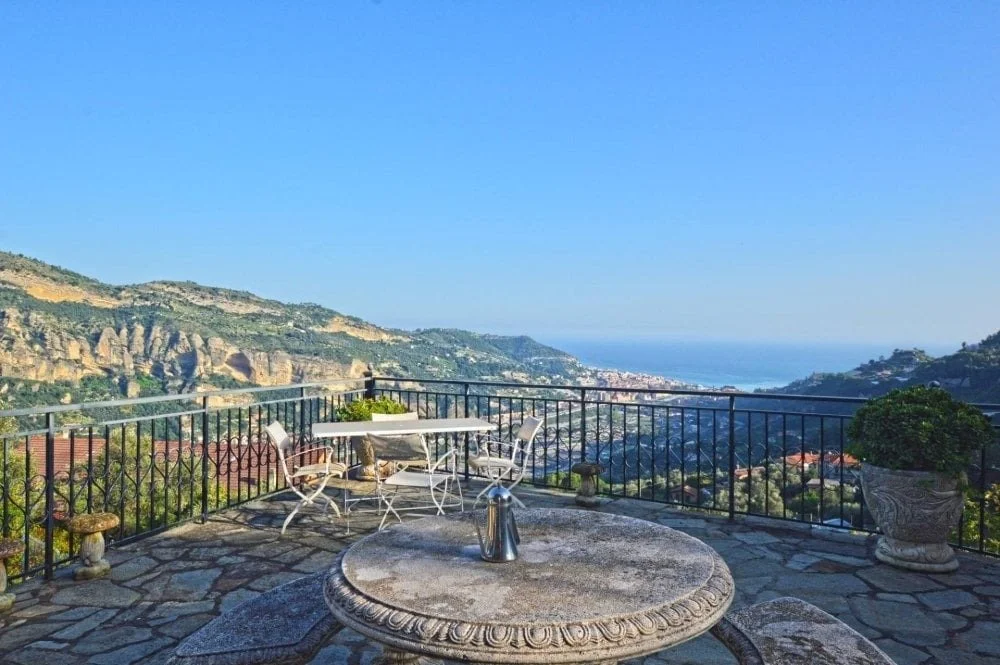
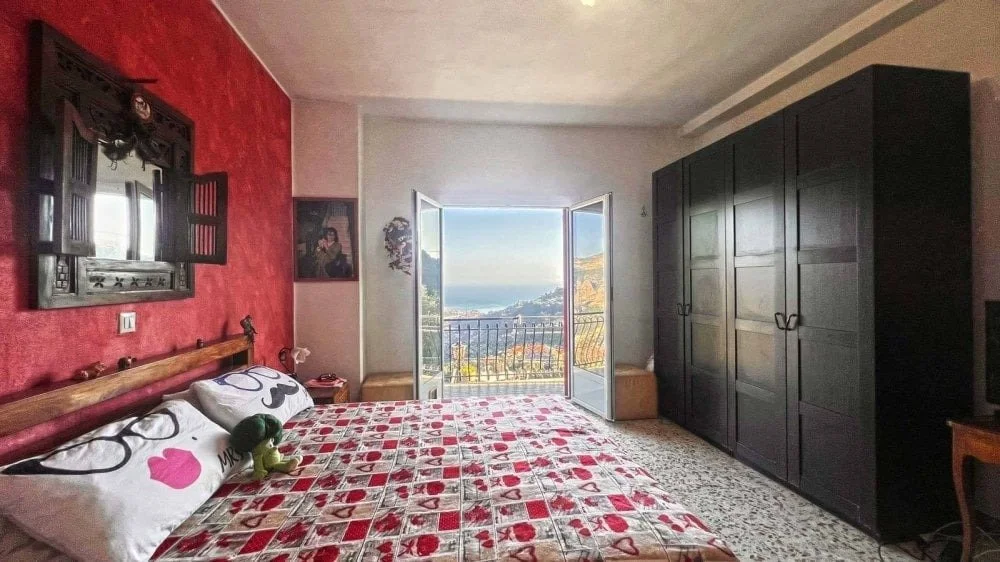
This property stands out because it combines several features that do not often appear together at this price point: a three-bedroom layout, panoramic terrace, sea and mountain views, olive grove, covered parking and a location close to the French border. On paper, that makes it a strong lifestyle purchase and potentially a flexible long-stay or holiday-use asset.
The main issue is that the apartment sits within a two-unit villa rather than a straightforward standalone house or a conventional apartment block. That structure can work perfectly well, but it makes documentation more important. A buyer needs to know whether this unit is fully autonomous in cadastral and title terms, what exactly is privately owned versus shared, and how maintenance and costs are handled in practice if there are no formal condominium charges. "No condominium charges" can sound positive, but it often just means costs are managed informally rather than absent.
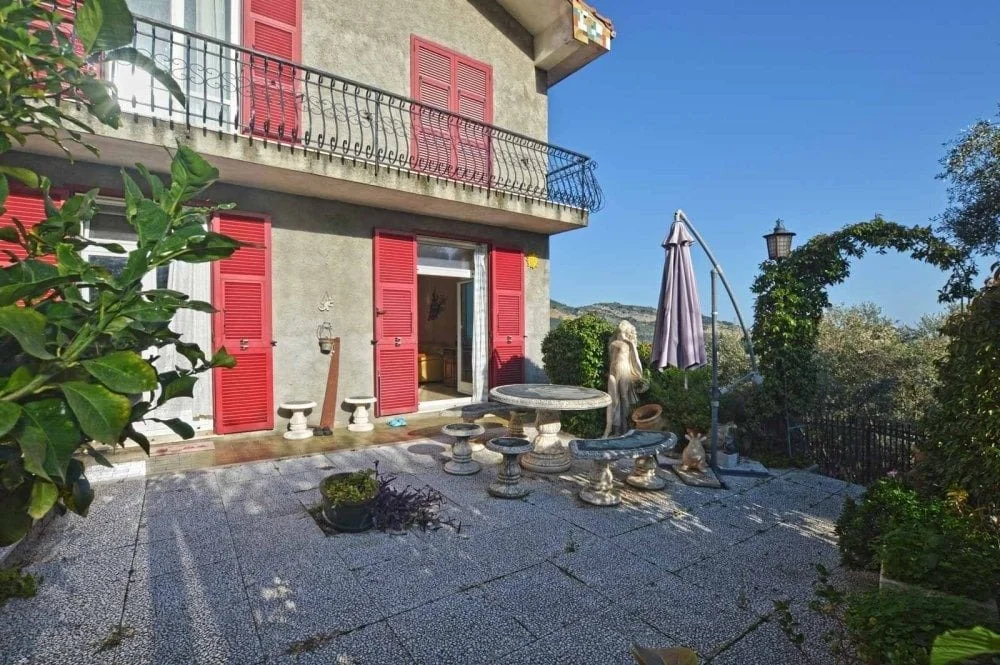
The land element adds another layer. An olive grove and vegetable garden can materially enhance value and appeal, but only if the ownership, boundaries, access rights and maintenance responsibilities are clear. Buyers should not assume that all external land shown in marketing forms part of the exclusive title of the apartment. This is especially important in hillside properties where paths, terraces, planting areas and parking can be informally used in a way that is more generous than the legal position.
The panoramic terrace and covered parking also deserve close attention. These are high-value selling points, and high-value selling points should be fully documented. A buyer should want to see that the terrace is for exclusive use, that the garage or storage space is correctly identified, and that both covered parking spaces are included in the title rather than simply used by custom.
Finally, the rental angle is plausible, especially given the views, parking and cross-border position, but it should not be assumed. In Liguria, tourist-rental operation sits within both regional and national identification systems, and any buyer should distinguish between broad marketability and actual legal readiness. The attractive story here is clear. The due diligence task is to make sure the paperwork tells the same story.
Targeted Questions
Legal Status and Two-Unit Villa Structure
The buyer needs confirmation that the apartment is legally independent and not just informally divided within a larger villa.
It confirms category, consistency, size references and whether the unit exists as described.
It helps verify the internal layout, terrace relationship, ancillary spaces and whether the marketed configuration matches the filed plan.
Separate cadastral identification is a core indicator of autonomy.
Even in a two-unit setup, a buyer may still share responsibility for common elements.
Informal arrangements can work until repair costs or disputes arise.
"No condominium charges" does not mean no shared maintenance liability.
Written rules reduce future uncertainty and neighbour conflict.
Longstanding informal use can mislead buyers about what is actually included.
Small shared-property arrangements depend heavily on practical cooperation.
Land, Olive Grove and Garden
The value and usability of the property change significantly depending on whether the land is exclusive or shared.
Buyers should quantify rather than assume external land ownership.
Rural and hillside boundaries can be hard to interpret on site without a plan.
Exclusive use is more valuable than tolerated use.
The listing appeal should match the legal extent of ownership.
This helps distinguish lifestyle appeal from genuine agricultural usefulness.
Shared land management can create future obligations or friction.
Productive garden land is far more useful when water arrangements are clear.
These can reduce privacy and future control over the property.
Buyers should be able to see what they are actually acquiring.
Terrace, Parking and Ancillary Spaces
A high-value terrace should be documented, not merely assumed.
Terrace size materially affects value, usability and rental appeal.
Terrace repairs can be expensive, especially if there are shared structural implications.
Responsibility may not be as simple as exclusive use.
Parking value depends on legal inclusion, not just current use.
Buyers should verify that both spaces are deeded and usable.
"Covered" can mean different things in practical and value terms.
Ancillary spaces are frequently mentioned in marketing more broadly than in legal documents.
Storage can be highly useful, but value depends on legal and physical practicality.
Practical access affects daily life and rental usability.
Condition, Systems and Energy Position
"Move-in ready" is a marketing description, not a technical statement.
Invoices help prove scope, recency and seriousness of upgrades.
Electrical updates are important for safety and future insurance confidence.
Older plumbing can create hidden post-purchase costs.
Buyers need to understand real comfort and operating cost, especially in a hillside setting.
Cooling matters for comfort and rental appeal in warm months.
A buyer should test real affordability, not just purchase price.
In Italy the property should have an APE for sale, so unclear wording needs explanation.
The seller should make the APE available to prospective buyers during the sale process.
Window quality is a key indicator of actual efficiency and comfort.
Attractive views do not compensate for poor thermal performance.
Ground-floor hillside apartments can carry moisture-related risk.
Access, Shared Areas and Practical Use
Daily usability matters more than the headline location.
Road status affects maintenance liability and long-term convenience.
Hidden shared infrastructure costs can undermine the "no charges" message.
Shared use areas should be understood before purchase.
Two-unit living can feel very different from a standalone house.
Practical friction points often emerge only after purchase if not asked in advance.
Rental Potential and Cross-Border Appeal
Past use can provide real evidence of demand.
Verified past performance is more valuable than general optimism.
In Liguria, furnished tourist apartments need the regional code before obtaining the national CIN.
A two-unit villa structure and shared elements can affect practical compliance.
Italy's national identification system now sits alongside the regional process.
Cross-border appeal is useful only if it translates into real buyer or rental demand.
Seasonality affects yield assumptions and ownership strategy.
Buyers should understand which features genuinely support future resale or rental premiums.
A distinctive property still benefits from evidence-based benchmarking.
Negotiation Intelligence
Buyer Leverage
Medium–High
Key Drivers
Typical Negotiation Range
5-15% below asking
Neutral Phrasing Examples
Country Layer
Italy (Regulatory Context March 2026)
For a purchase like this, cadastral clarity matters. The Agenzia delle Entrate provides services for visura catastale and planimetria consultation, which is exactly why buyers should ask for the visura and registered floor plan for the specific unit rather than relying on marketing descriptions alone.
That means a buyer considering this Ventimiglia property for short lets should not ask only "Is rental possible?" The better question is whether the unit's cadastral identity, intended use, documentation and regional registration path are all clean enough to support Citra first and CIN second. In a simple standalone apartment that may be straightforward. In a two-unit villa with land, shared elements and no formal condominium charges, it is worth checking before assumptions harden into pricing.
Viewing Strategy
When you view this property, inspect it in three layers.
Next Step
Verify from the listing:
Autonomous legal status within the two-unit villa
Request the visura catastale and planimetria for the specific apartment so you can confirm that it is a properly separate unit with a clear share of any common parts and responsibilities.
Land, olive grove and garden boundaries
Ask for a cadastral map and title evidence showing exactly which external areas are included exclusively with the apartment, because the value of the olive grove and vegetable garden depends on documented ownership rather than current use.
Terrace, garage and covered parking on title
Confirm that the panoramic terrace, garage or storage room and both covered parking spaces are all legally attached to the apartment and reflected in the property documentation.
Shared-cost structure despite no condominium charges
Clarify how roof, façade, access and other shared expenses are handled between the two owners, and whether there is any written agreement governing those costs.
APE and rental-registration readiness
Request the current APE and ask whether the property has ever obtained or pursued Citra and CIN registration, so you can assess both efficiency and realistic tourist-rental potential.
A prepared buyer should approach the agent calmly and frame questions as due diligence. For example: “To help me assess the property properly and prepare a serious offer, could you share the visura catastale, planimetria, documents for the terrace and parking spaces, any agreement on shared costs, and the current APE and rental-registration position?”
Because this is a two-unit Ligurian property where legal configuration, land ownership and rental assumptions all materially affect value, run it through the Property Risk Assessment to test title and shared-ownership risks, or use the Market Comparison Tool to benchmark whether the rare mix of views, land and parking genuinely justifies the asking price once the paperwork is confirmed.
Disclaimer: The Property Drop is buyer-focused intelligence, zero sales agenda. We curate exceptional properties, in southern Europe, from third-party agents and arm you with decision tools. No commission, no transactions, no agent partnerships, no skin in the game beyond helping you choose wisely. Information stays accurate until it doesn't (properties sell, prices shift, markets move). Everything here is shared for informational purposes only and should not be treated as legal, financial, or investment advice. Images belong to original agents. Read our Terms of Service to learn more.
IMPORTANT REMINDER: When contacting property agents featured on The Property Drop, you are entering into direct communication with third parties. It's recommended that you verify all property details independently, conduct thorough due diligence, engage qualified professionals (solicitors, surveyors, financial advisors), understand your rights and obligations under local property laws, and never send money or make commitments without proper legal protection.
