
The Buyer Playbook: Stone Villa with Valley Views Across Four Floors, Rezzo, Italy, €320,000

Buyer Playbook
Pre-Viewing Intelligence Report
This independent buyer guidance report relates to this specific property located in Italy. It is provided for informational purposes only and does not constitute legal, tax, structural or survey advice. Cadastral conformity, renovation permits, agibilità, terrace ownership, access rights, land boundaries, tourist-rental compliance, energy documentation, and any planning or landscape restrictions must always be verified with qualified Italian professionals such as a geometra, architetto, ingegnere, notaio or surveyor, and with the relevant municipal offices where required. This report is designed to help buyers evaluate the property before arranging a viewing or making an offer. It highlights due diligence issues and targeted questions to ask the estate agent. The analysis is based on the listing details and publicly available regulatory context at the time of writing.
Playbook Contents
Property Snapshot
Location
Rezzo, Liguria, Italy
Property type
Stone villa / village-edge hillside house
Asking price
€320,000
Layout
Four floors connected by a spiral staircase
Bedrooms
Marketed as 3, but listing language suggests possible ambiguity that needs confirming
Bathrooms
Marketed as 3
Key features
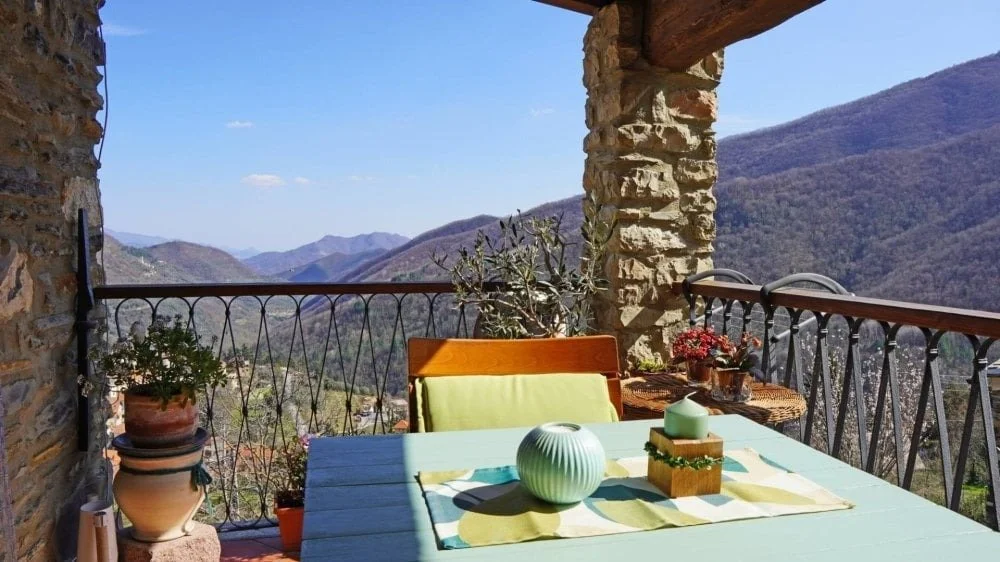
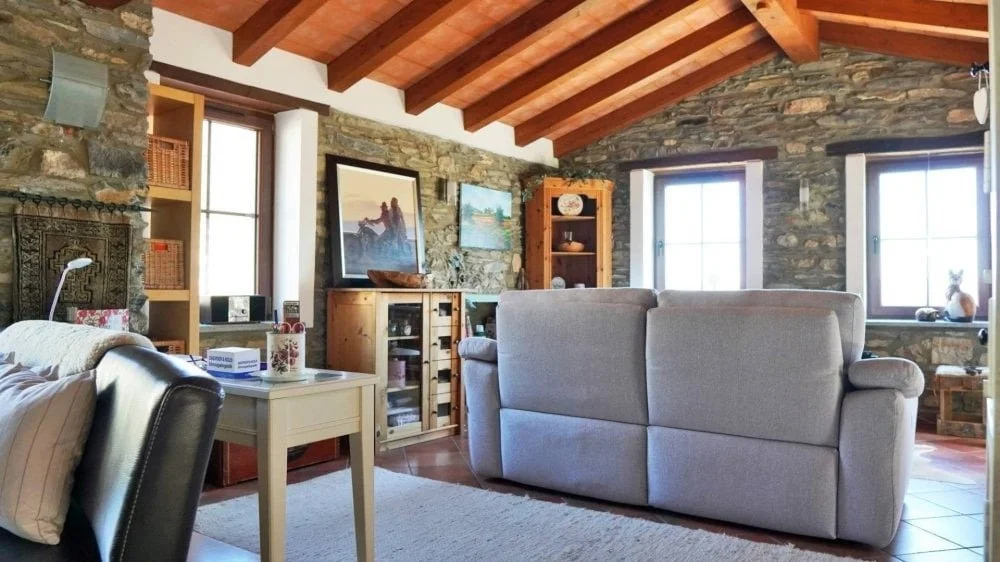
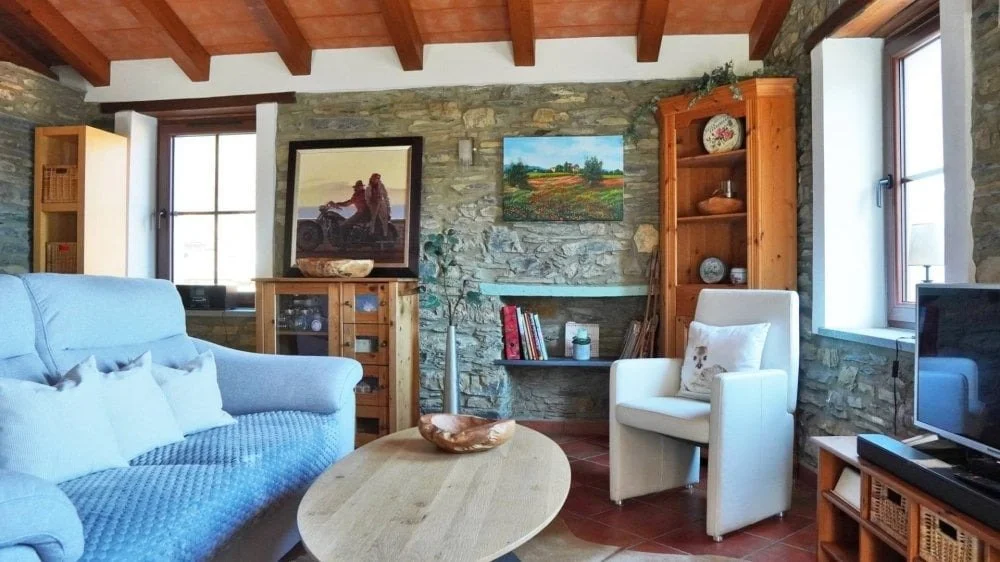
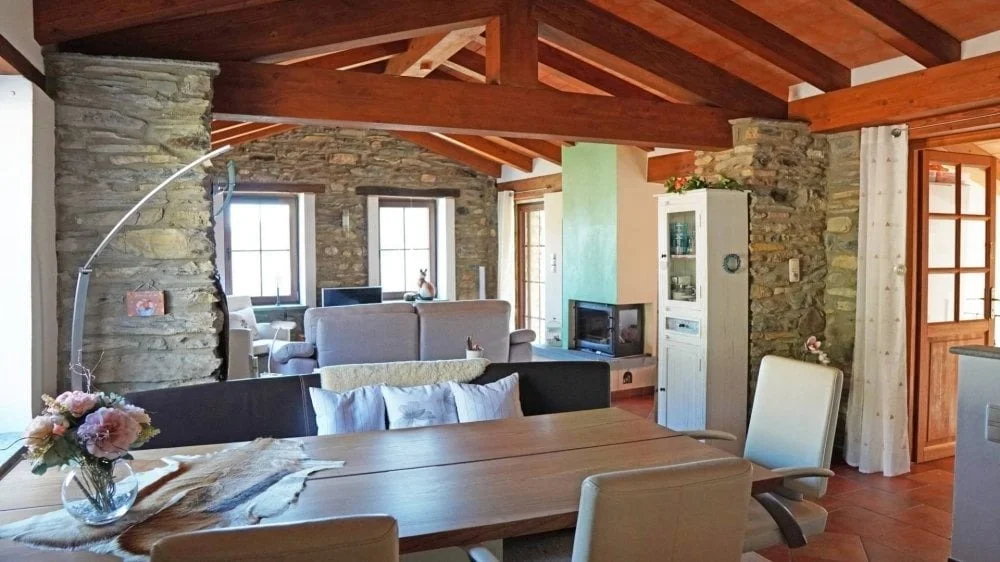
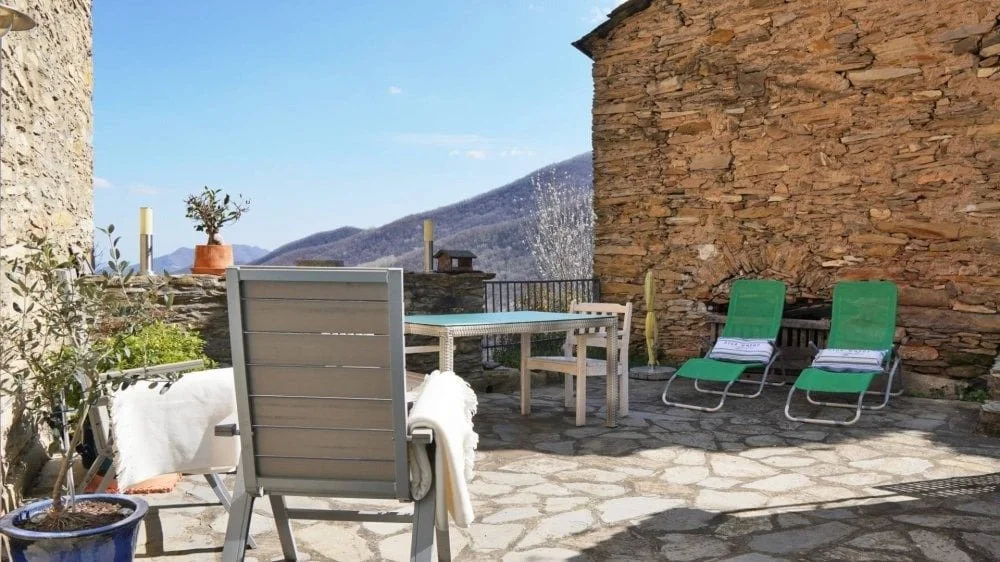
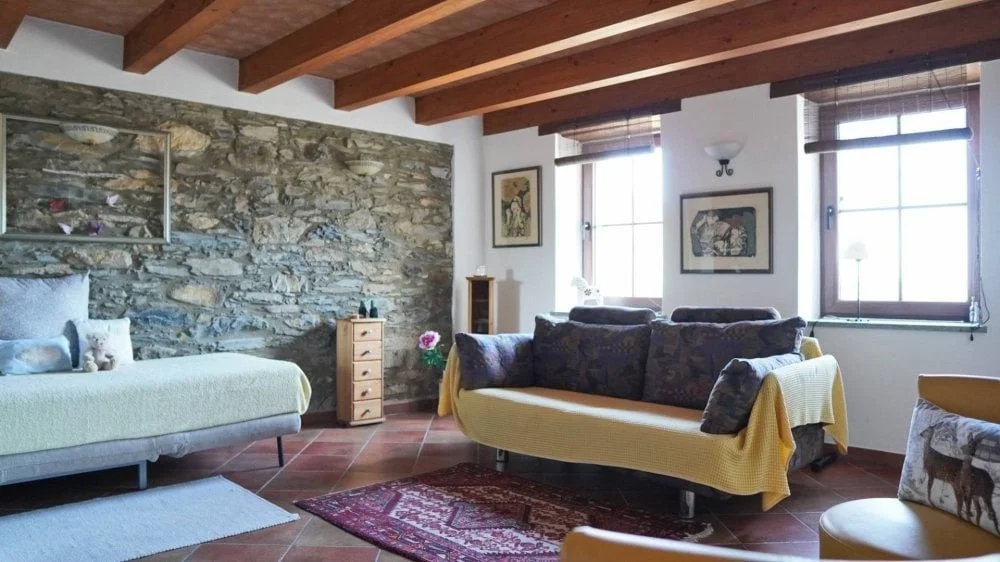
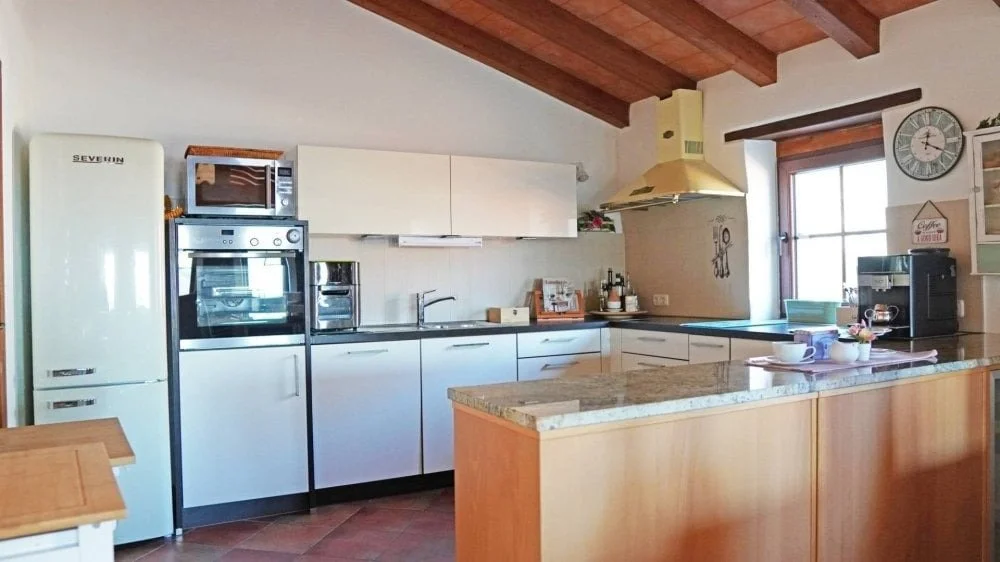
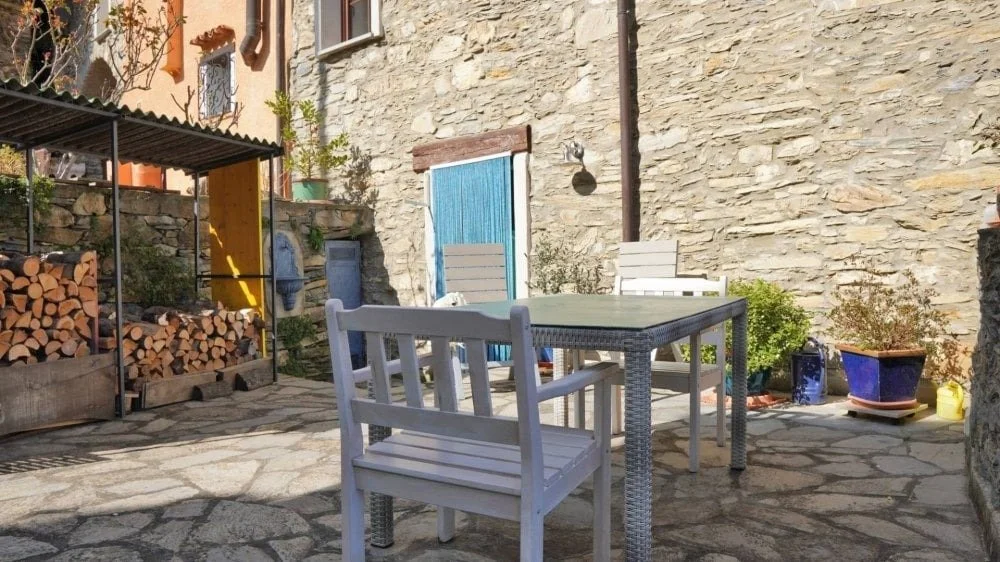
Valley views, multiple terraces, panoramic terrace, stone character, rustic-modern renovation
Furnishing
Partially furnished
Lifestyle angle
Rural Ligurian retreat with strong second-home appeal and possible niche holiday-rental potential
Main practical themes
Vertical layout, terrace status, access, parking, renovation documentation, and energy clarity
Energy note
Listing states "Energy Class N", which requires clarification
Risk Radar
Overview
This is the sort of Ligurian property that can feel extremely seductive in listing form because it offers exactly the ingredients buyers tend to romanticise: stone walls, layered floor-by-floor living, panoramic terraces, village context, and the promise of rustic character without obvious ruin-level work. The risk is that multi-level hillside houses often derive much of their charm from features that also create the most important due-diligence issues.
The first major theme is paperwork alignment. A four-floor property that has been renovated should have clean cadastral records, registered floor plans, and a layout that matches what is actually being sold. In Italy, the buyer should want to see the visura catastale and planimetrie early, especially where internal distribution, stair configuration, terraces and ancillary spaces materially shape value. The Agenzia delle Entrate confirms that cadastral records and floor plans are part of the official property data available through the cadastral system.
The second theme is practical usability. A spiral staircase can be beautiful, but in a house spread across four floors it becomes central to daily life, not a decorative flourish. This affects resale audience, guest suitability, furniture movement, mobility, fire-safety comfort, and the real experience of using terraces and bathrooms on different levels. A layout that works for a couple on short stays may be far less convincing for full-time living, older buyers, or family use.
The third theme is whether the renovation was deep or simply attractive. With a stone house in the Ligurian hills, buyers need to understand roof condition, wall moisture behaviour, insulation quality, window performance, drainage, heating efficiency and whether the terraces are properly waterproofed and legally attached to the property. The listing gives atmosphere, but not enough technical detail to assume the hard parts were properly handled.
The fourth theme is energy and compliance. "Energy Class N" is not a normal way to present the energy performance of a standard residential resale, so this needs immediate clarification. In Italy, the Attestato di Prestazione Energetica is a recognised document in sale and letting contexts, and energy certification has long been mandatory for property transfers. If the listing shorthand is incomplete, the buyer needs the actual APE and supporting explanation.
The final theme is rural practicality and rental logic. Buyers often underestimate access-road condition, parking convenience, internet reliability, winter use, guest luggage movement and terrace maintenance in hill properties. These become even more important if the buyer is underwriting the villa as a retreat with occasional tourist-rental use. In Liguria, tourist-rental compliance now sits within both regional systems and the national CIN framework, so rental potential should be treated as a regulated operational question, not just a demand question.
Targeted Questions
Cadastral and Legal Documentation
The cadastral classification helps confirm how the property is formally recorded and whether the marketed use matches the legal record.
A multi-level home needs registered plans that correspond to the actual building being sold.
Layout discrepancies can create delay, cost and legal complications at sale stage.
The more the property has been altered, the more important it is to verify permit history and conformity.
The type of building title used helps reveal the true scale of the works.
A buyer needs the actual documentary trail, not a verbal assurance that renovation was regular.
Agibilità is an important comfort point on lawful use and completion of the habitable space. Under Article 24 of DPR 380/2001, the segnalazione certificata di agibilità is part of the Italian building framework.
Early confirmation helps avoid last-minute regularisation work before completion.
Hill properties sometimes include spaces that are used in practice but not clearly documented.
Any past irregularity can affect timing, cost and mortgageability.
Renovation Scope and Condition
"Renovated" is only useful when the scope is precise.
The answer materially affects future capex risk.
Invoices help verify both scope and seriousness.
Even older paperwork helps establish workmanship standards and accountability.
In a stone hillside house, roof problems can escalate quickly into moisture and insulation issues.
Terraces and roofs are among the most expensive failure points in properties like this.
Stone houses can behave very differently from standard modern homes.
Past remedial work often reveals where the property has been vulnerable.
Hillside properties need structural questions asked early, not after commitment.
Insurance history can reveal recurring issues that presentation conceals.
Energy, Heating and Systems
The wording is unclear and should not be relied upon without the actual energy document.
The APE is the core energy-performance document used in Italian sale and letting contexts.
Buyers need a clear timeline if the listing energy information is provisional.
Real bills often tell a more useful story than a high-level energy label.
Multi-floor stone houses can be expensive to heat if systems are patchy or underpowered.
Summer comfort in upper floors can be very different from ground-floor comfort.
Window quality strongly affects comfort, energy performance and weatherproofing.
The thermal behaviour of a stone house depends heavily on whether roof and floor insulation were improved.
Old systems hidden behind attractive finishes are a common rural-property risk.
A vertically arranged house can strain undersized hot-water systems.
Layout and Everyday Usability
Four-floor living only works if the vertical arrangement is genuinely practical.
Bedroom ambiguity directly affects value, resale and rental marketing.
If it is the sole route, it becomes the house's key functional constraint.
Comfort and safety vary hugely between decorative and genuinely usable spiral stairs.
Daily practicality often decides whether buyers continue to love a property after the first month.
Narrow buyer usability means narrower resale liquidity.
Terrace enjoyment depends on layout convenience, not just views.
A charming plan can still perform badly as a liveable home.
Multi-level stone properties often have comfort imbalances that matter over time.
Buyers should distinguish between emotional floor area and genuinely easy-to-use floor area.
Terraces, Land and Boundaries
Boundary certainty is essential where terraces and hillside land drive value.
Shared or encumbered terraces change both privacy and value.
Terrace failures can be expensive and disruptive in hill properties.
A terrace over habitable rooms creates a higher waterproofing and leak-risk profile.
Easements can materially affect privacy and control.
Shared obligations can create hidden cost and neighbour friction.
Hillside maintenance is often more important than buyers first assume.
A terrace can be central to value, so its legal status must be clean.
Access, Parking and Local Practicalities
Access can be easy in summer and difficult in wet or colder conditions.
Private road obligations can create cost and access disputes.
Rural comfort drops quickly if parking is awkward or remote.
Future works and guest use depend on real-world access.
Remote-work viability is now a fundamental use question.
Thick walls and vertical layouts can weaken signal where people actually spend time.
Retreat appeal is one thing, workable year-round living is another.
Rental Potential and Operational Fit
Actual operating history is more useful than a generic yield estimate.
Guest comments often reveal practical issues such as stairs, parking or heat.
Liguria now sits within the national CIN framework and regional systems, so buyers should verify the pathway rather than assume a simple short-let setup. Regione Liguria states that obtaining the CIN is mandatory and that tourist landlords already registered on Ross1000 can access the national BDSR to obtain it.
Existing compliance can reduce setup friction for a buyer who wants income flexibility.
A feature that sells the property visually may reduce guest satisfaction in practice.
Negotiation Intelligence
Buyer Leverage
Medium-High
Key Drivers
Typical Negotiation Range
5-15% below asking
Neutral Phrasing Examples
Country Layer
Italy (Regulatory Context March 2026)
For a property like this, cadastral alignment matters early. The Agenzia delle Entrate confirms that cadastral services allow access to key property information, including visure and planimetrie, which is why buyers of renovated multi-floor homes should ask for both immediately.
Viewing Strategy
Go to this viewing with a usability lens as much as a romantic one.
Next Step
Verify from the listing:
Cadastral conformity across all four floors
Request the visura catastale and registered planimetrie for the entire house so you can confirm that the current multi-level layout, terrace arrangement and room count match the legal records.
Renovation permits and agibilità position
Ask for the SCIA or other building title, the final technical filings, and confirmation of the agibilità position so you can judge whether the renovation was fully regularised.
Spiral staircase practicality
Clarify whether the spiral stair is the only internal connection between floors and assess whether it works for everyday living, guest use, furniture movement and long-term resale appeal.
Terrace ownership and waterproofing
Confirm that all terraces are for the villa’s exclusive use, legally included in the title, and supported by clear evidence on condition, drainage and waterproofing.
Energy documentation and running costs
Resolve the unclear “Energy Class N” wording by obtaining the full APE and recent utility bills so you can understand comfort levels and likely annual costs.
A prepared buyer should approach the agent calmly and frame questions as due diligence.
Because this is a vertical stone property where documentation, access and terrace condition materially affect value, run it through the Property Risk Assessment and the European Property Energy Risk Assessor before contacting the agent.
Disclaimer: The Property Drop is buyer-focused intelligence, zero sales agenda. We curate exceptional properties, in southern Europe, from third-party agents and arm you with decision tools. No commission, no transactions, no agent partnerships, no skin in the game beyond helping you choose wisely. Information stays accurate until it doesn't (properties sell, prices shift, markets move). Everything here is shared for informational purposes only and should not be treated as legal, financial, or investment advice. Images belong to original agents. Read our Terms of Service to learn more.
IMPORTANT REMINDER: When contacting property agents featured on The Property Drop, you are entering into direct communication with third parties. It's recommended that you verify all property details independently, conduct thorough due diligence, engage qualified professionals (solicitors, surveyors, financial advisors), understand your rights and obligations under local property laws, and never send money or make commitments without proper legal protection.
