
The Buyer Playbook: Geodesic Dome with Private River Beach, Coimbra District, Portugal, €250,000











Buyer Playbook
Pre-Viewing Intelligence Report
This independent buyer guidance report relates to this specific property located in Portugal. It is provided for informational purposes only and does not constitute legal, tax, structural or survey advice. Land classification, planning permissions, licença de utilização, water rights, river-margin status, Alojamento Local eligibility, off-grid infrastructure compliance, and any restrictions affecting future construction or tourism use must always be verified with qualified Portuguese professionals such as a advogado, arquiteto, engenheiro, surveyor, and with the relevant Câmara Municipal, Conservatória do Registo Predial, Autoridade Tributária and Agência Portuguesa do Ambiente. This report is designed to help buyers evaluate the property before arranging a viewing or making an offer. It highlights due diligence areas and targeted questions to ask the estate agent. The analysis is based on the listing details and publicly available regulatory context at the time of writing. In Portugal, the land registry certificate proves the current registered legal position of the property, energy certification is mandatory in property transactions, Alojamento Local registration is handled through prior notification with the municipality, and water-resource use can require APA licensing depending on the asset and use.
Playbook Contents
Property Snapshot
Location
Coimbra District, Portugal, in the Oliveira do Hospital municipality area
Property type
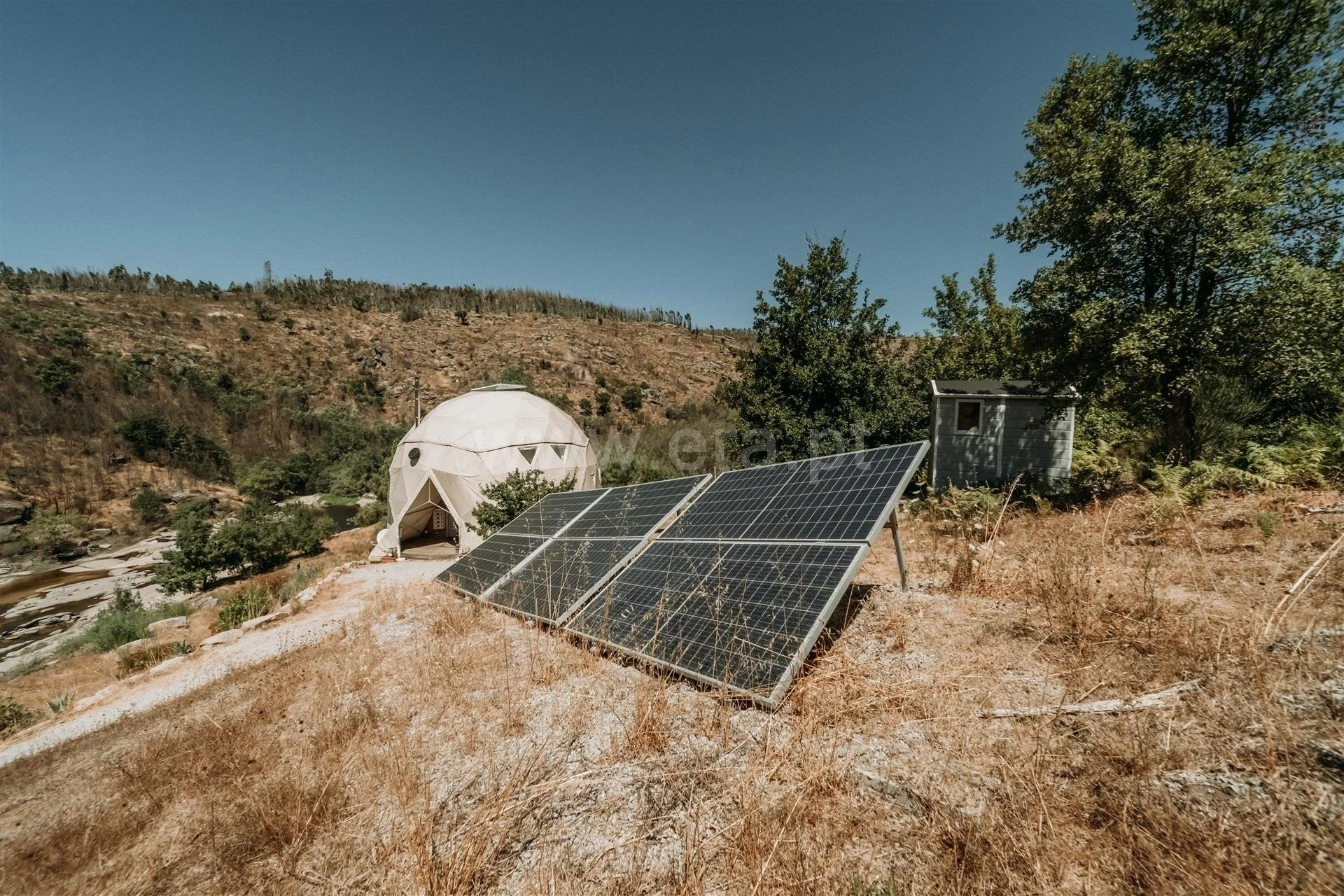
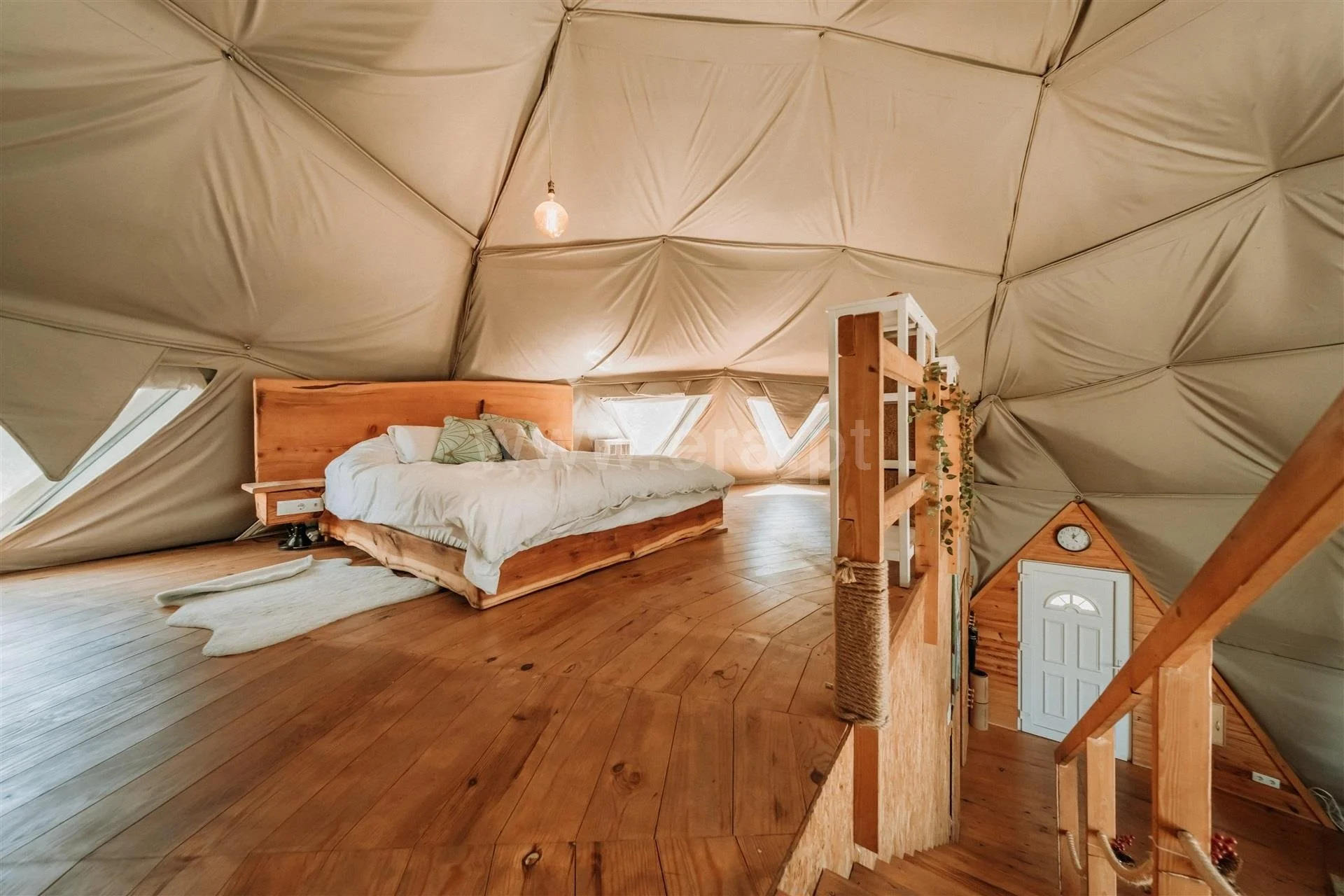
Geodesic dome home on a large rural holding
Asking price
€250,000
Land
Approx. 7.1 hectares / 71,552 m²
Setting
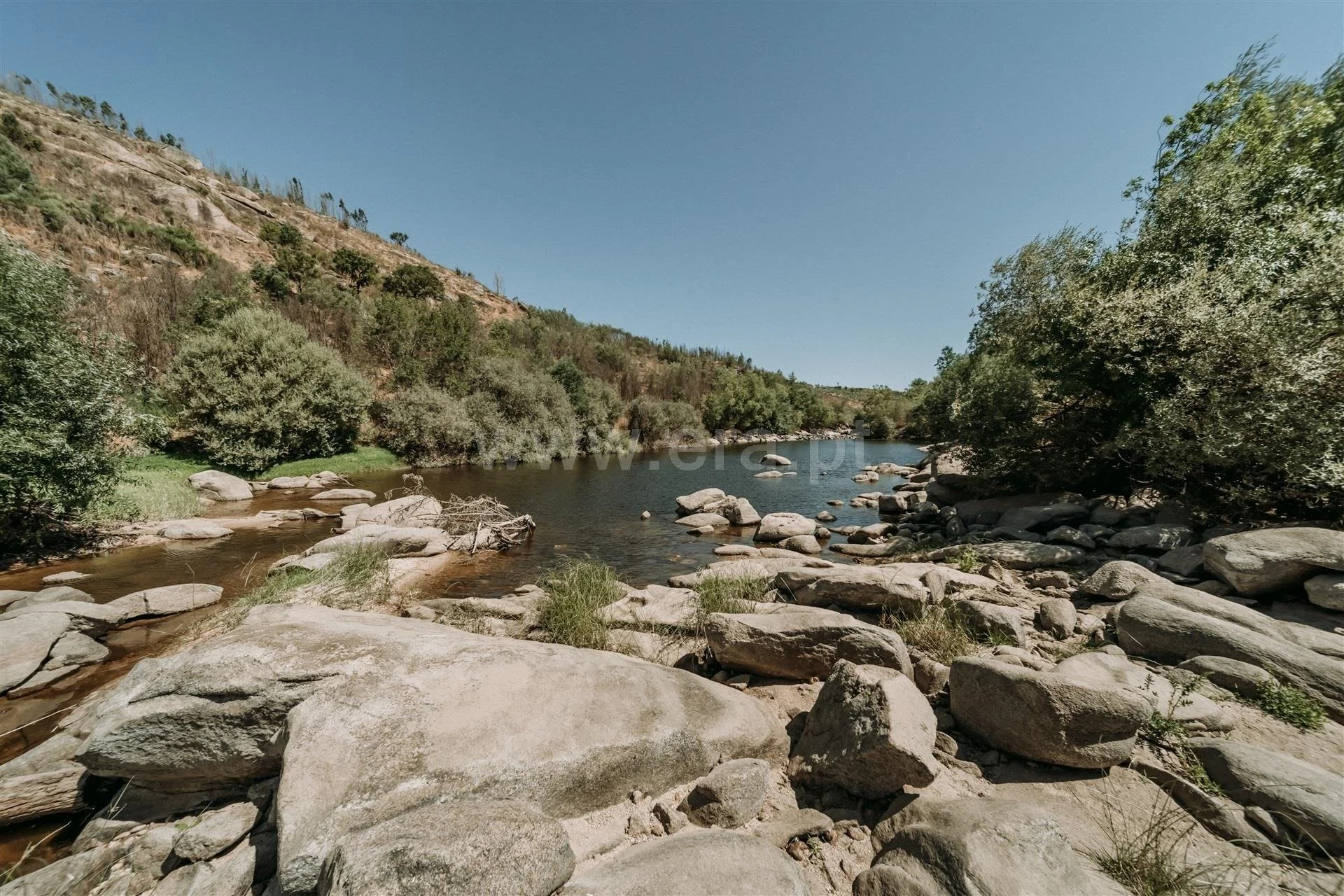
Highly private natural setting with river frontage and no close neighbours claimed
Main structure
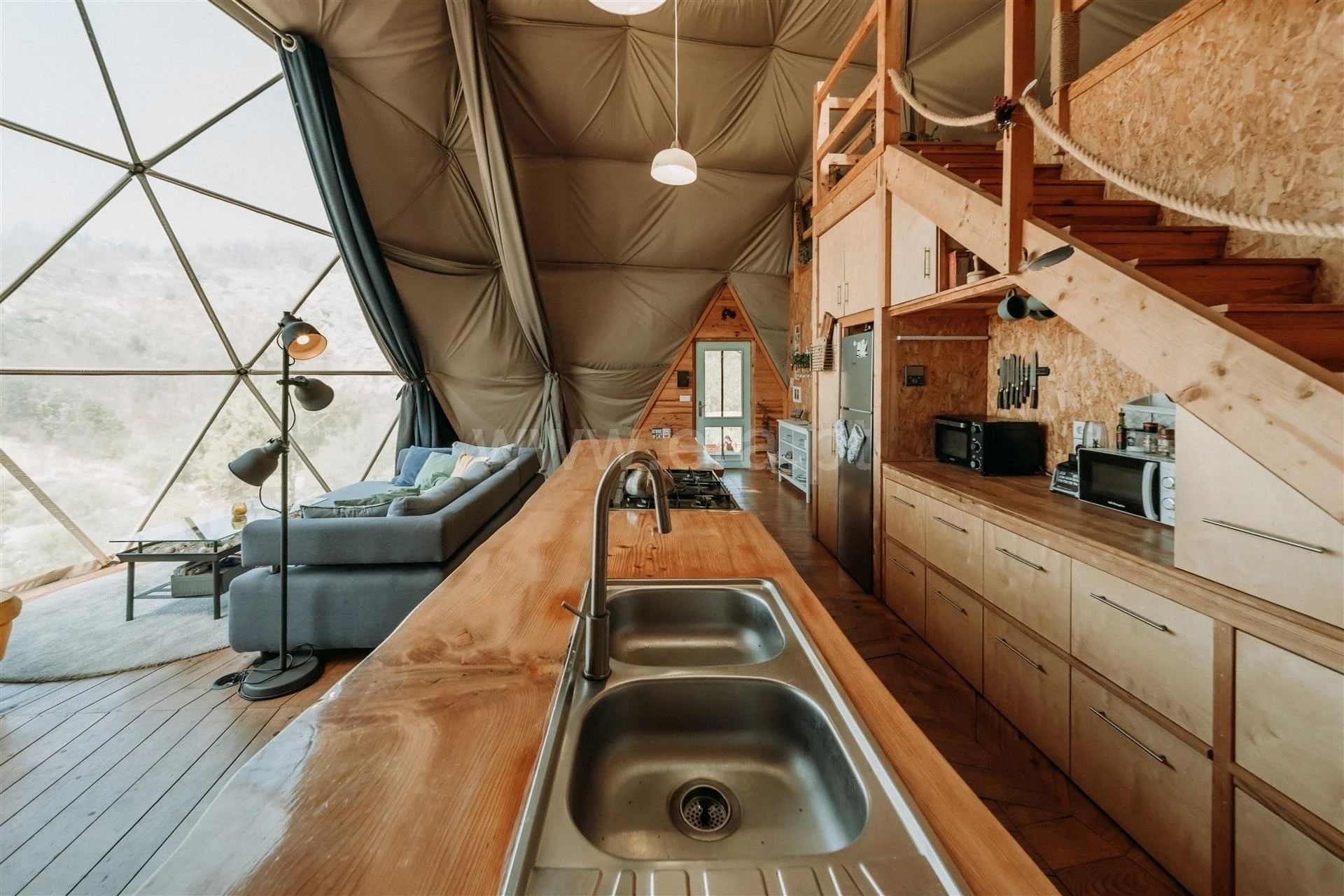
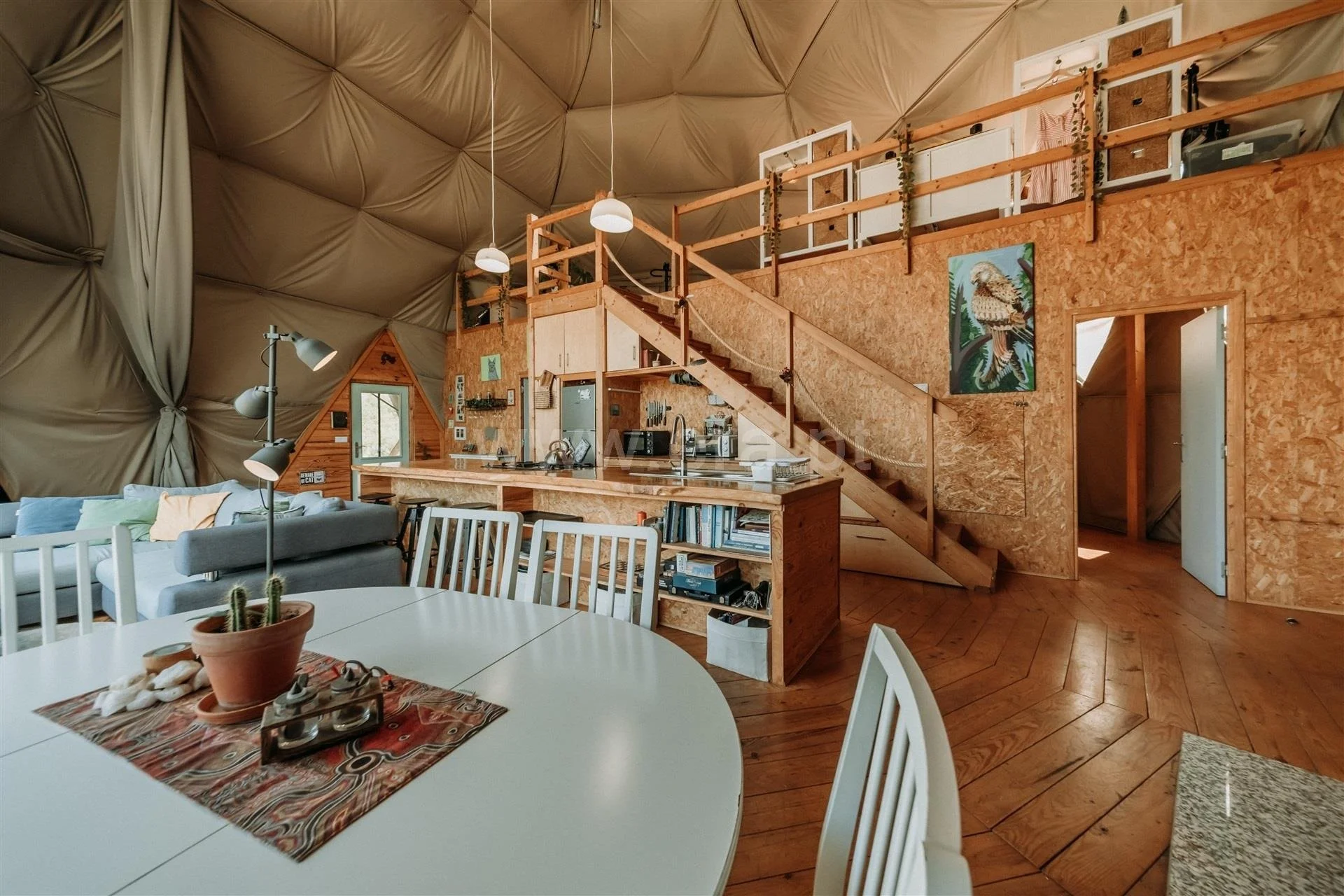
Geodesic dome
Energy rating
Class B
Utilities
Fully off-grid, with solar power, private well, 20,000-litre water tank and triple filtration
Water feature
Private river beach claimed in the listing
Heating
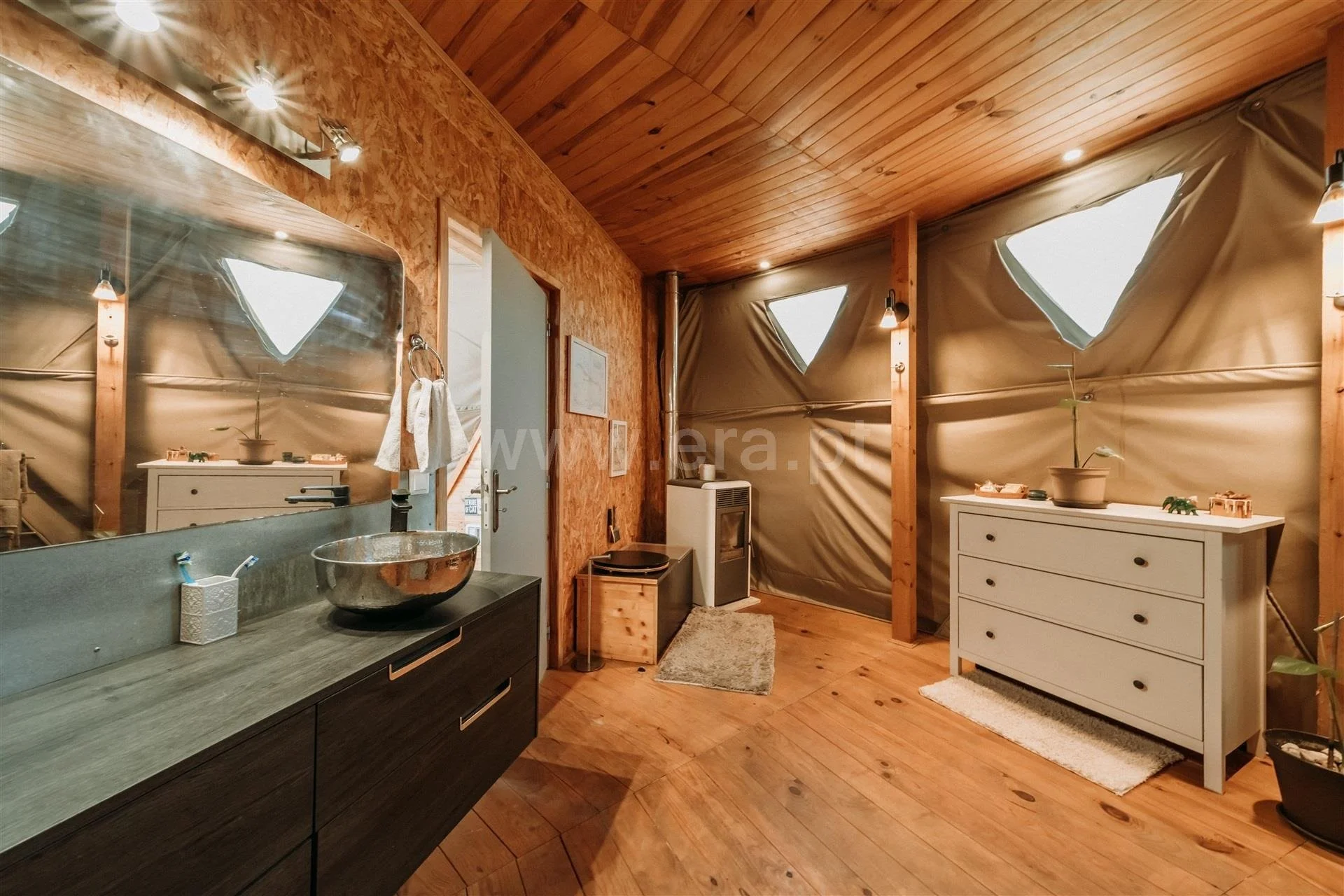
Pellet fireplace for winter use
Lifestyle angle
Strong eco-living, retreat and nature-immersion appeal
Key due diligence themes
Legal status of the dome and any other structures, land classification, water rights, river-margin access status, off-grid systems, septic compliance, and AL / retreat-use feasibility
Risk Radar
Overview
This is a highly distinctive property where the emotional appeal is obvious. A geodesic dome, 7.1 hectares, a private river beach, off-grid energy, private water and a strong energy rating create a rare lifestyle proposition that will appeal to buyers looking for retreat-style living, eco-tourism potential or an unconventional primary residence.
The main issue is that unusual rural properties often live in the gap between what exists physically and what is fully regularised on paper. Here, the dome itself is the first due diligence priority. Because it is an unconventional structure, the buyer needs to confirm not just that it exists on the land, but that it was lawfully approved, properly recorded, and supported by the correct usage documentation for habitation or other intended use.
The second major issue is water. A private well and river frontage can be hugely valuable, but only if the legal position is clear. In Portugal, water-resource use, margins and access around watercourses can engage specific public-law rules, even where the surrounding land is privately owned. That means the phrase "private river beach" should be treated as a prompt for documentary verification rather than a fact to assume at face value.
The third issue is operational resilience. Off-grid living can be highly attractive, but it shifts risk from utility companies to the property owner. Solar generation, battery storage, filtration, water tank condition, winter performance, septic arrangements and road access become core parts of the buying decision rather than background details.
Finally, the commercial angle should be handled carefully. An eco-dome with river access may have obvious retreat or short-stay appeal, but that does not automatically mean it is ready for Alojamento Local or other guest operation. Registration, local planning rules, land classification and the actual legal status of the dome all need to support the intended use before projected income becomes meaningful.
Targeted Questions
Title, Registry and Legal Configuration
These documents help confirm the tax description, ownership position, land area and whether the legal record matches the listing.
A structure that exists physically but is missing or vaguely described in the registry may need clarification or regularisation.
The legal classification affects taxation, planning, use rights and future development options.
Large rural holdings sometimes include multiple articles that should be checked separately.
Buyers should verify whether the marketed area aligns with the formal records.
A buyer needs to understand whether any legal burdens affect ownership or use.
Rural properties are much easier to assess when the physical layout is mapped clearly.
Ancillary structures may also need to be lawful and properly described.
Planning, Construction and Land Classification
Unconventional structures still need the correct planning route and approval.
This helps confirm what exactly was authorised and how the structure was intended to function.
Habitation status is central to safe purchase and future saleability.
Buyers should get a precise answer rather than rely on informal explanations.
The original legal use classification affects future flexibility and licensing.
Land-use classification can strongly limit expansion, new construction or tourism-related development.
These constraints can limit works, rebuilding and commercial use.
Environmental overlays can affect river use, construction and retreat activity.
Prior written guidance can reduce uncertainty for the buyer.
A buyer should know whether any unresolved planning issues already exist.
Water Rights, Well and River Margin
Groundwater capture can require registration or licensing depending on the asset and use.
Buyers should confirm that water extraction is not merely tolerated informally.
Water volume limits matter for residential, irrigation and retreat use.
An off-grid property depends heavily on reliable year-round water supply.
Private supply should be verified for drinking safety, especially before any guest use.
Buyers need evidence, not assumptions, about suitability for human consumption.
Filtration quality and maintenance directly affect water safety and reliability.
Backup resilience is critical in remote properties.
Riverfront ownership and practical use do not always align perfectly.
Marketing language around water access can be broader than the formal legal position.
Portuguese water margins can be subject to public-use constraints even on private holdings.
River-edge use can carry specific environmental and legal restrictions.
Off-Grid Energy and Infrastructure
Buyers need to know whether the system realistically supports year-round modern living.
Battery age and size materially affect off-grid resilience and replacement risk.
Equipment identification helps assess quality, lifespan and parts availability.
Transferable warranties can reduce early ownership risk.
Off-grid systems are usually most vulnerable in winter, not summer.
Buyers should understand how the property copes with low-generation periods.
The intended load profile may be very different from the buyer's plans.
Regular maintenance is a strong indicator of operational reliability.
A mountain setting may require more robust winter heating than the listing implies.
Unconventional structures can perform very differently from conventional homes in cold weather.
Wastewater, Sanitation and Compliance
Off-grid properties need a compliant and adequately sized wastewater solution.
The type of system affects maintenance, compliance and expansion potential.
Installation quality and age help indicate reliability and likely future cost.
Service history is crucial for risk assessment.
Retreat or rental operation can exceed what a simple domestic setup was designed for.
Buyers should verify both design intent and legal compliance.
Access, Boundaries and Practical Use
Access rights are fundamental in remote rural holdings.
Maintenance and legal access can become major issues in isolated properties.
Practical accessibility affects day-to-day livability and marketability.
Remote-road maintenance can become a recurring ownership burden.
Large natural plots are often difficult to interpret without on-site boundary confirmation.
"Zero neighbours" does not necessarily mean zero third-party movement across the property.
Remote work and guest-market viability often depend on real, not theoretical, connectivity.
Signal quality can vary sharply in remote valley and mountain settings.
Rental Potential and Eco-Retreat Use
Past use gives real evidence of market appeal and operational practicality.
Verified trading history is far more valuable than general optimism.
Existing registration can materially reduce startup friction for a buyer.
Unconventional structures can raise documentation and use-class questions.
The modality affects capacity limits and operational setup.
Municipal constraints can block or delay registration in some areas.
A property may be habitable privately but still be operationally weak for hospitality use.
Insurance availability can materially affect business viability.
Negotiation Intelligence
Buyer Leverage
Medium-High
Key Drivers
Typical Negotiation Range
5-15% below asking
Neutral Phrasing Examples
Country Layer
Portugal (Regulatory Context March 2026)
For a purchase like this, the Portuguese land registry is a core starting point.
Viewing Strategy
When you view this property, do not treat it like an ordinary rural home. Treat it as a combination of dwelling, infrastructure system and land-rights package.
Next Step
Verify from the listing:
Legal status of the geodesic dome
Request the certidão permanente, caderneta predial, approved project documents and the licença de utilização so you can confirm that the dome is a lawfully authorised habitable structure rather than simply an attractive installation on rural land.
Well licence and river-margin rights
Ask for the well registration or water-use title, plus documentation showing the exact title boundary along the river, because “private river beach” may still be affected by public-use servitudes and water-domain rules.
Land classification and planning constraints
Confirm the PDM classification, any REN, RAN or protected-land overlays, and whether those restrictions limit future works, retreat use or additional structures on the 7.1-hectare holding.
Off-grid system capacity and service history
Verify the solar capacity, battery age, winter performance, water-tank and filtration servicing, and the wastewater system details so you can judge whether the property is genuinely robust for full-time living or guest use.
Alojamento Local feasibility
Clarify whether the dome’s current legal documentation supports AL registration in this municipality, and whether any local containment rules or practical compliance issues would limit eco-retreat or short-stay operation.
A prepared buyer should approach the agent calmly and frame questions as due diligence. For example: “To help me assess the property properly and prepare a serious offer, could you share the registry documents, the dome’s planning and usage paperwork, the water-rights documents for the well and river margin, and the specifications and service records for the off-grid systems?”
Because this is an unusual off-grid Portuguese property where legal status, water rights and infrastructure resilience all materially affect value, run it through the Property Risk Assessment to stress-test title, planning and utility risk, or use the Rental Yield Calculator once the AL route and true operating costs have been properly verified.
Disclaimer: The Property Drop is buyer-focused intelligence, zero sales agenda. We curate exceptional properties, in southern Europe, from third-party agents and arm you with decision tools. No commission, no transactions, no agent partnerships, no skin in the game beyond helping you choose wisely. Information stays accurate until it doesn't (properties sell, prices shift, markets move). Everything here is shared for informational purposes only and should not be treated as legal, financial, or investment advice. Images belong to original agents. Read our Terms of Service to learn more.
IMPORTANT REMINDER: When contacting property agents featured on The Property Drop, you are entering into direct communication with third parties. It's recommended that you verify all property details independently, conduct thorough due diligence, engage qualified professionals (solicitors, surveyors, financial advisors), understand your rights and obligations under local property laws, and never send money or make commitments without proper legal protection.
