
The Buyer Playbook: Two Stone Houses with Private Pool Alto Minho, Portugal, €455,500

Buyer Playbook
Pre-Viewing Intelligence Report
This independent buyer guidance report relates to this specific property located in Portugal. It is provided for informational purposes only and does not constitute legal, tax, structural or survey advice. Title position, the legal status of the two houses, licença de utilização, planning permissions, pool compliance, land boundaries, water and drainage arrangements, Alojamento Local eligibility, and any municipal or heritage-related constraints must always be verified with qualified Portuguese professionals such as an advogado, arquiteto, engenheiro, surveyor or licensed property consultant, and with the relevant Conservatória do Registo Predial, Autoridade Tributária and Câmara Municipal. This report is designed to help buyers evaluate the property before arranging a viewing or making an offer. It highlights due diligence issues and targeted questions to ask the estate agent. The analysis is based on the listing details and publicly available regulatory context at the time of writing.
Playbook Contents
Property Snapshot
Location
Alto Minho, northern Portugal, near Vila Nova de Cerveira
Property type
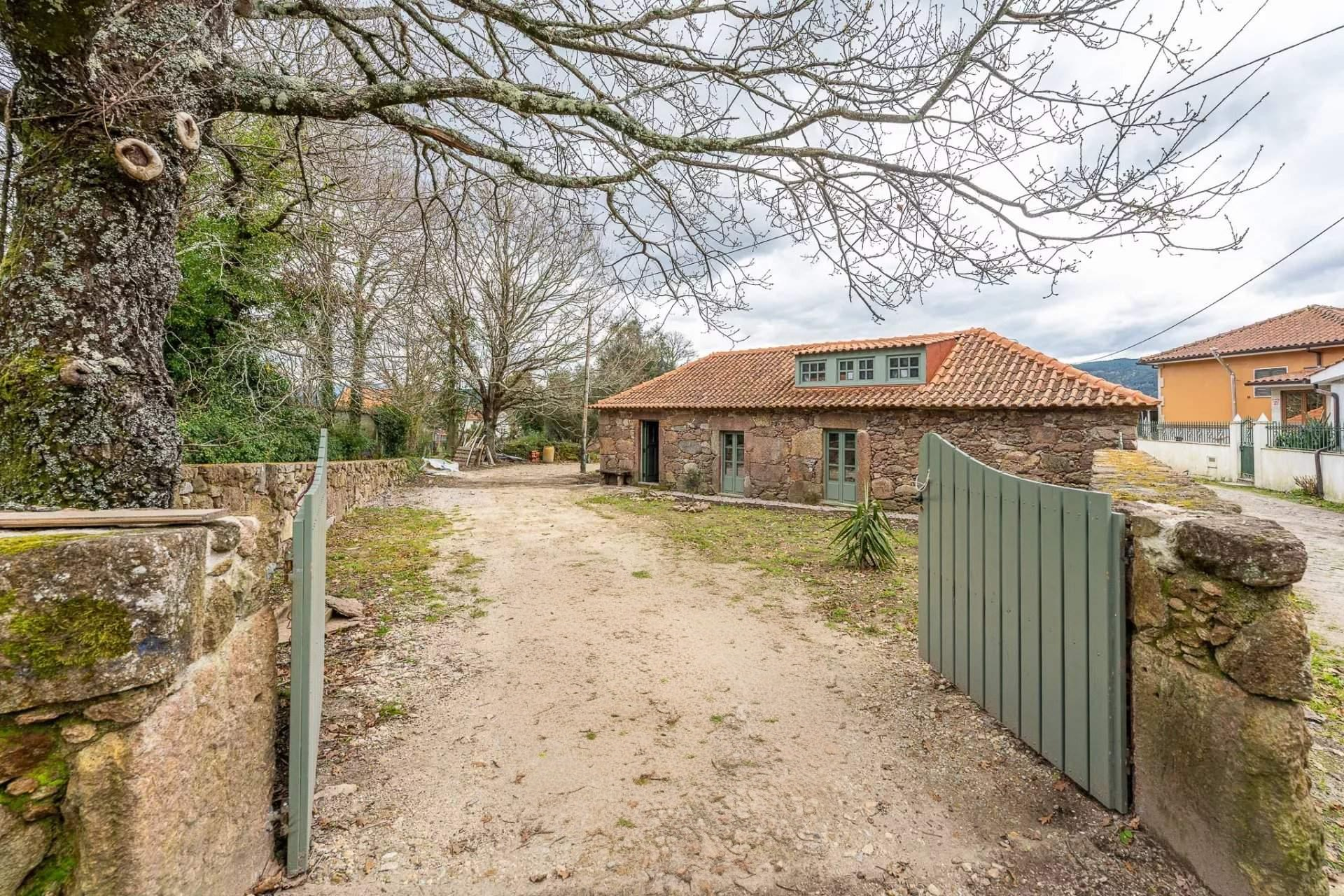
Dual-villa property with two independent stone houses
Price
€455,500
Original build year
1937
Condition
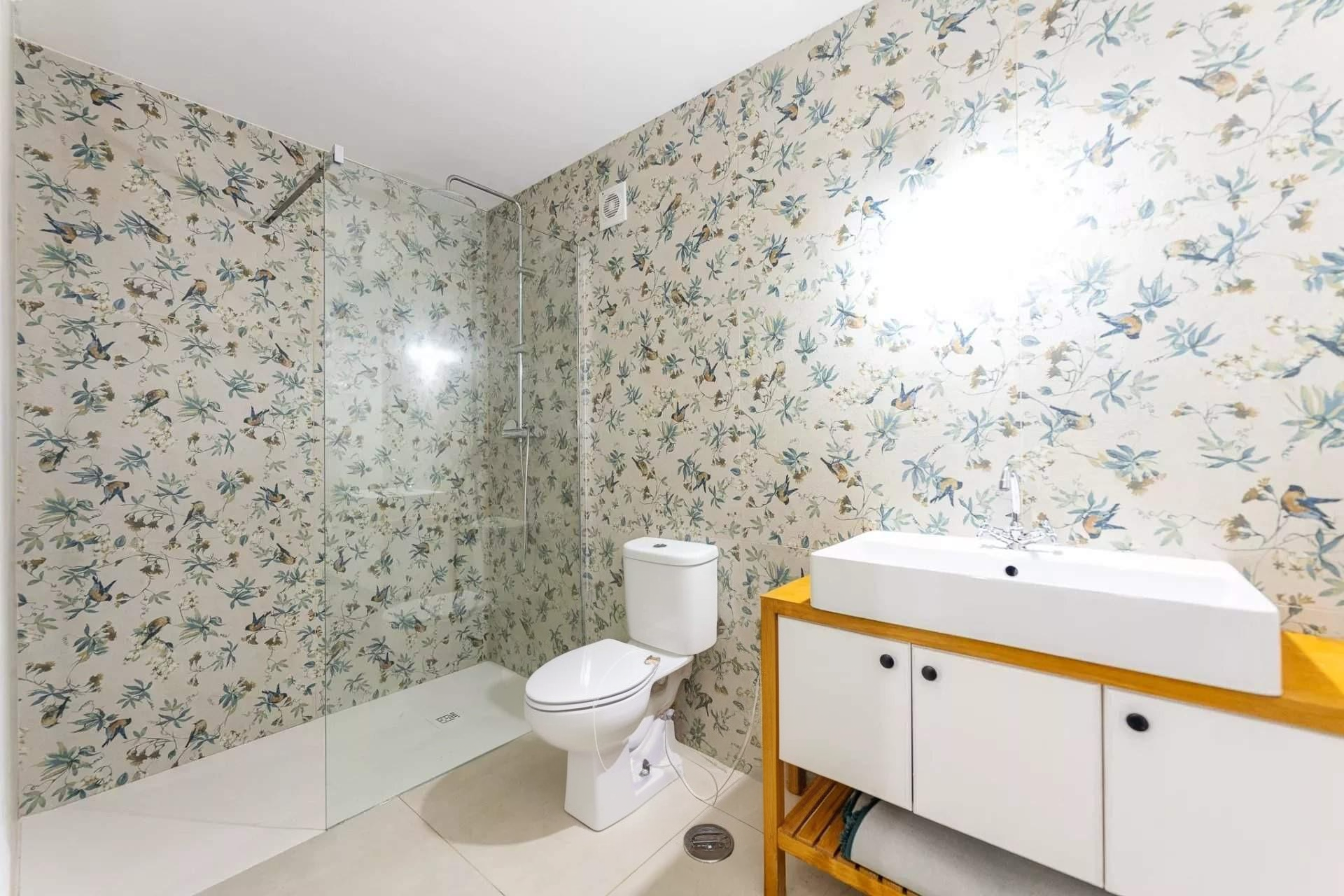
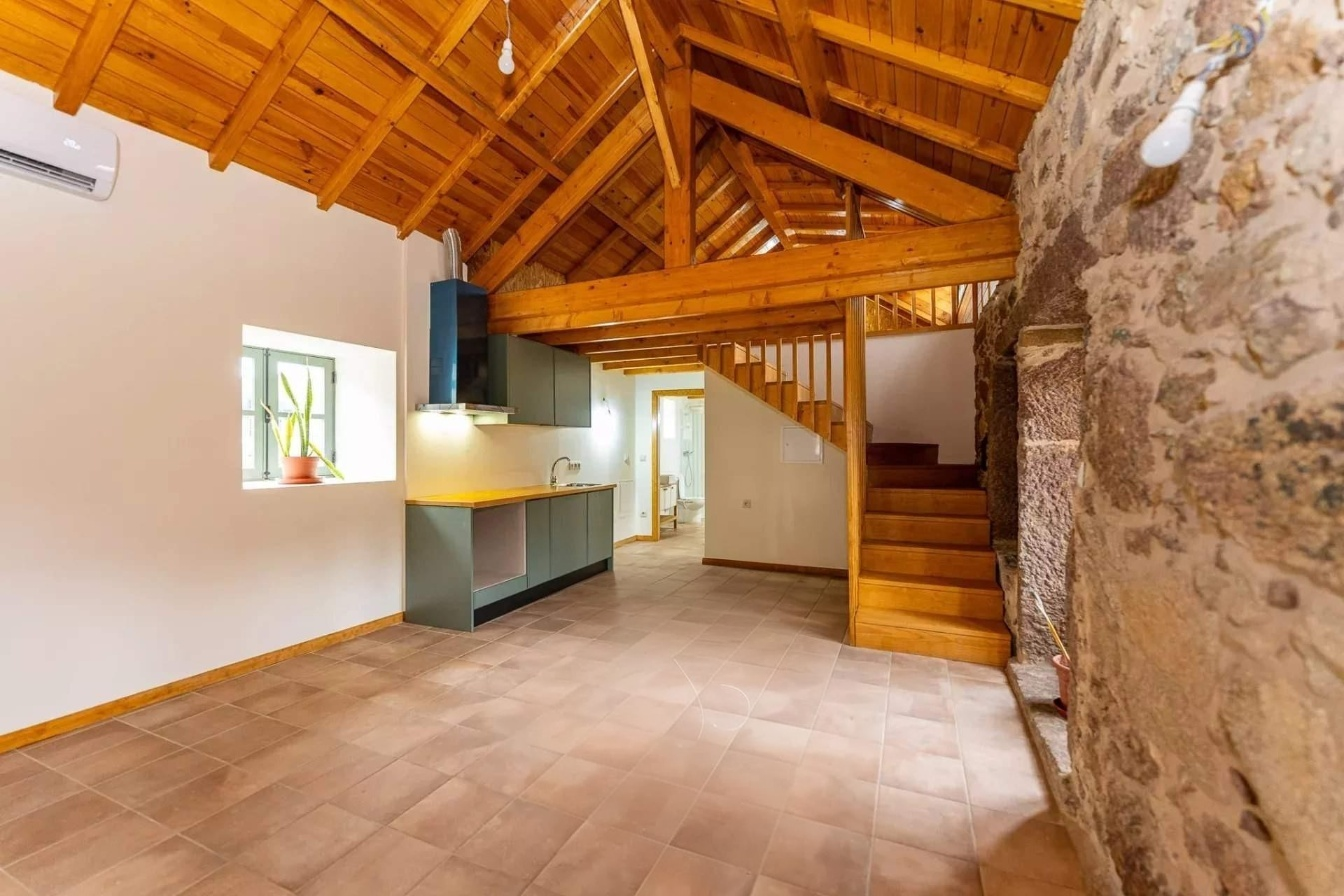
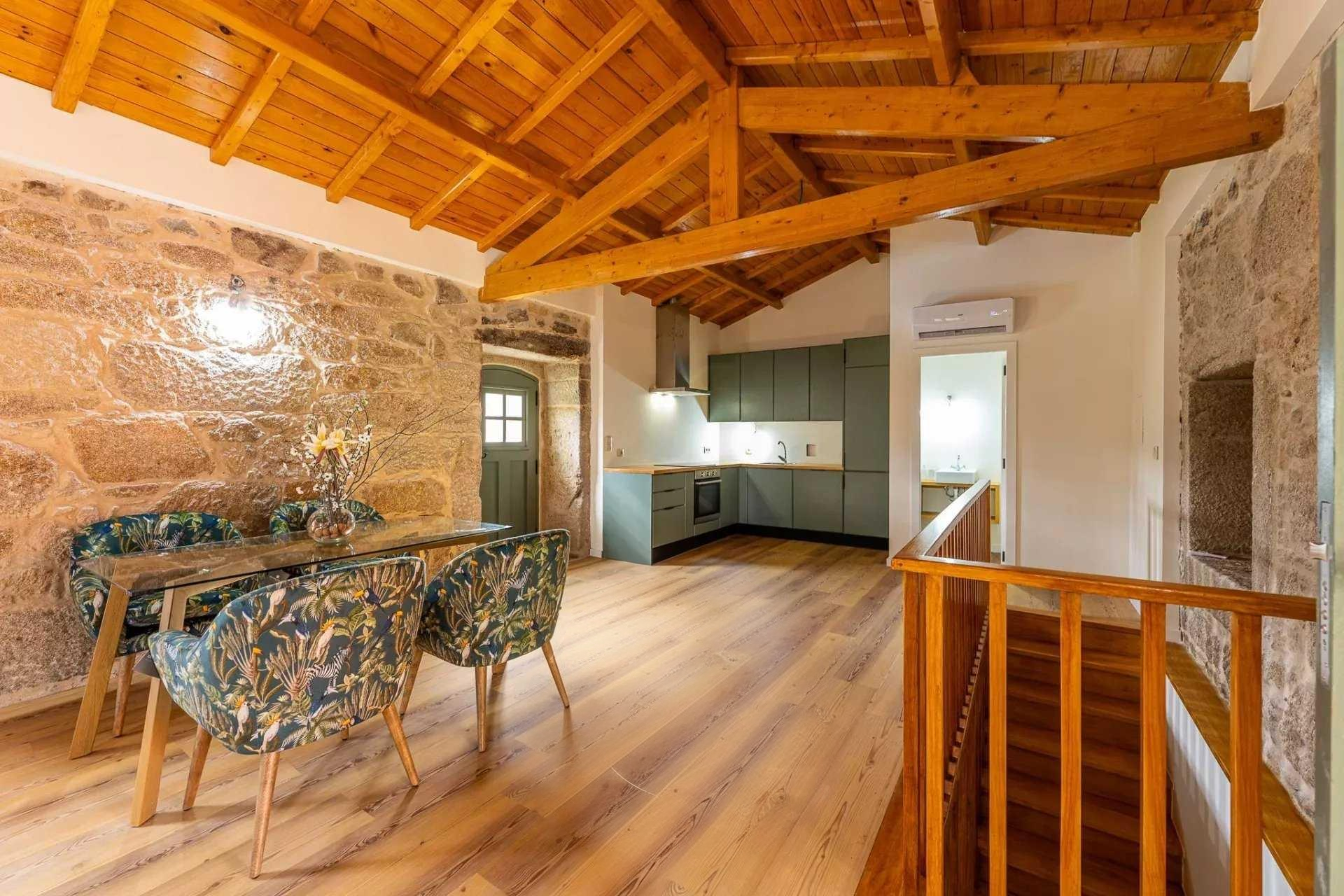
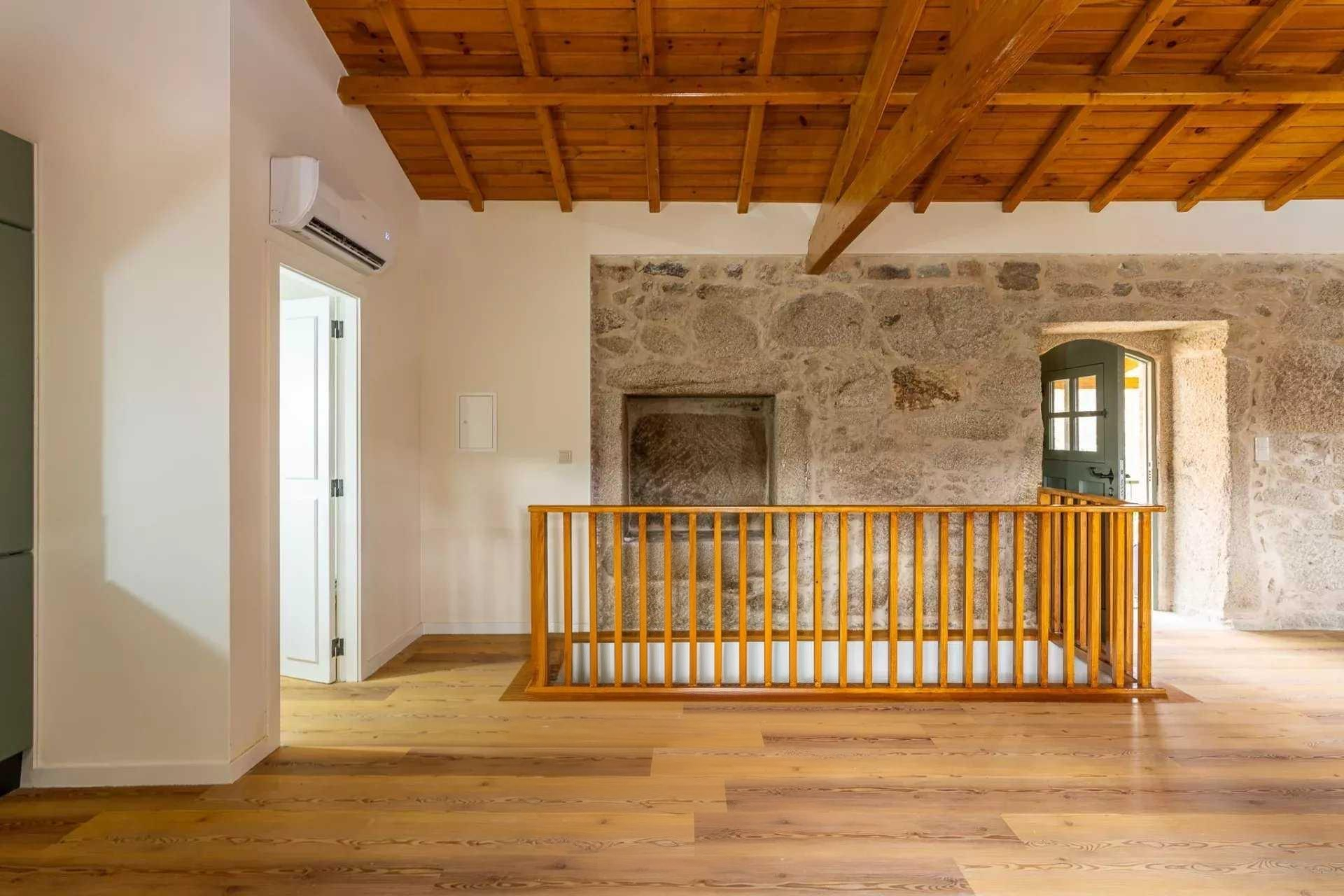
Marketed as fully restored
Accommodation concept
Two fully independent dwellings on one property
Outdoor features
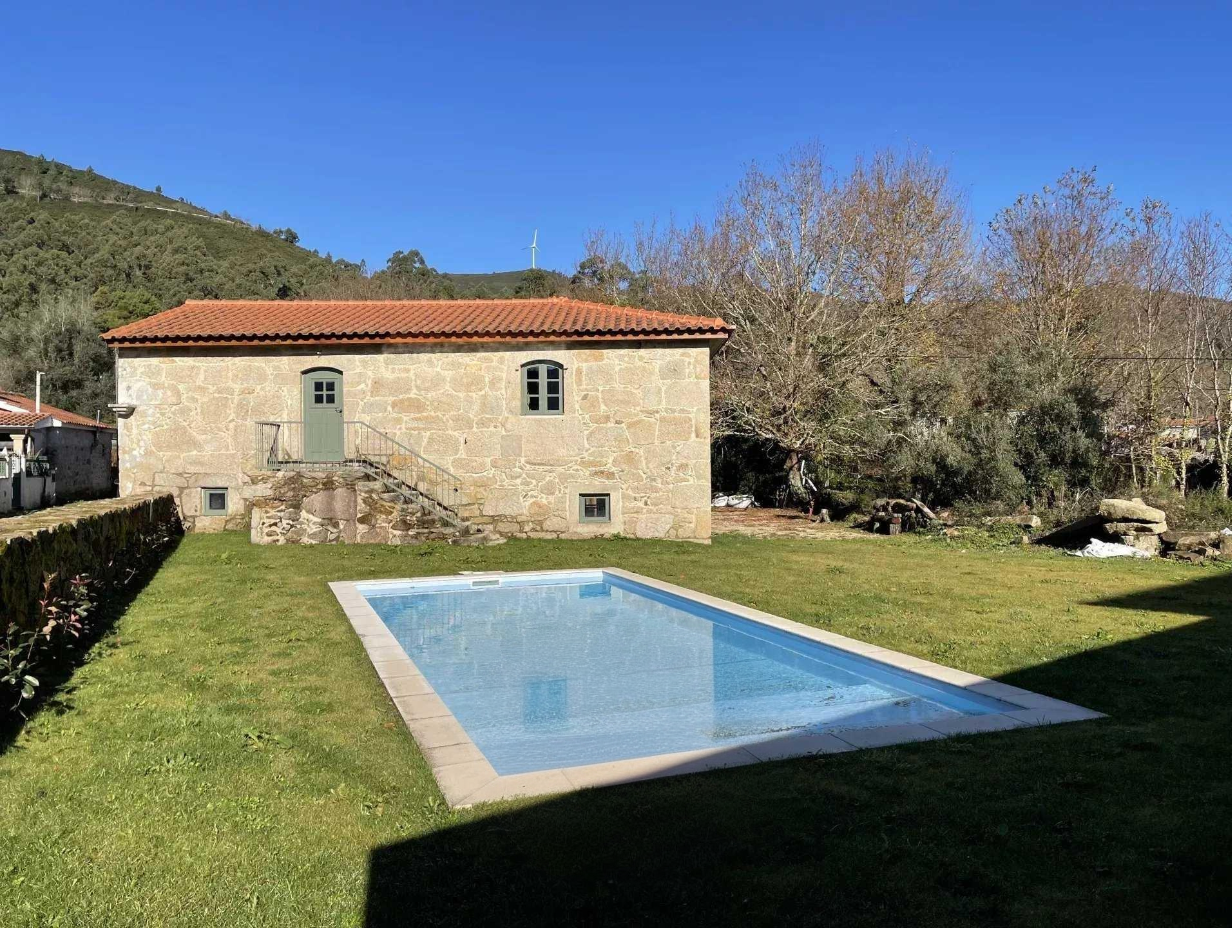
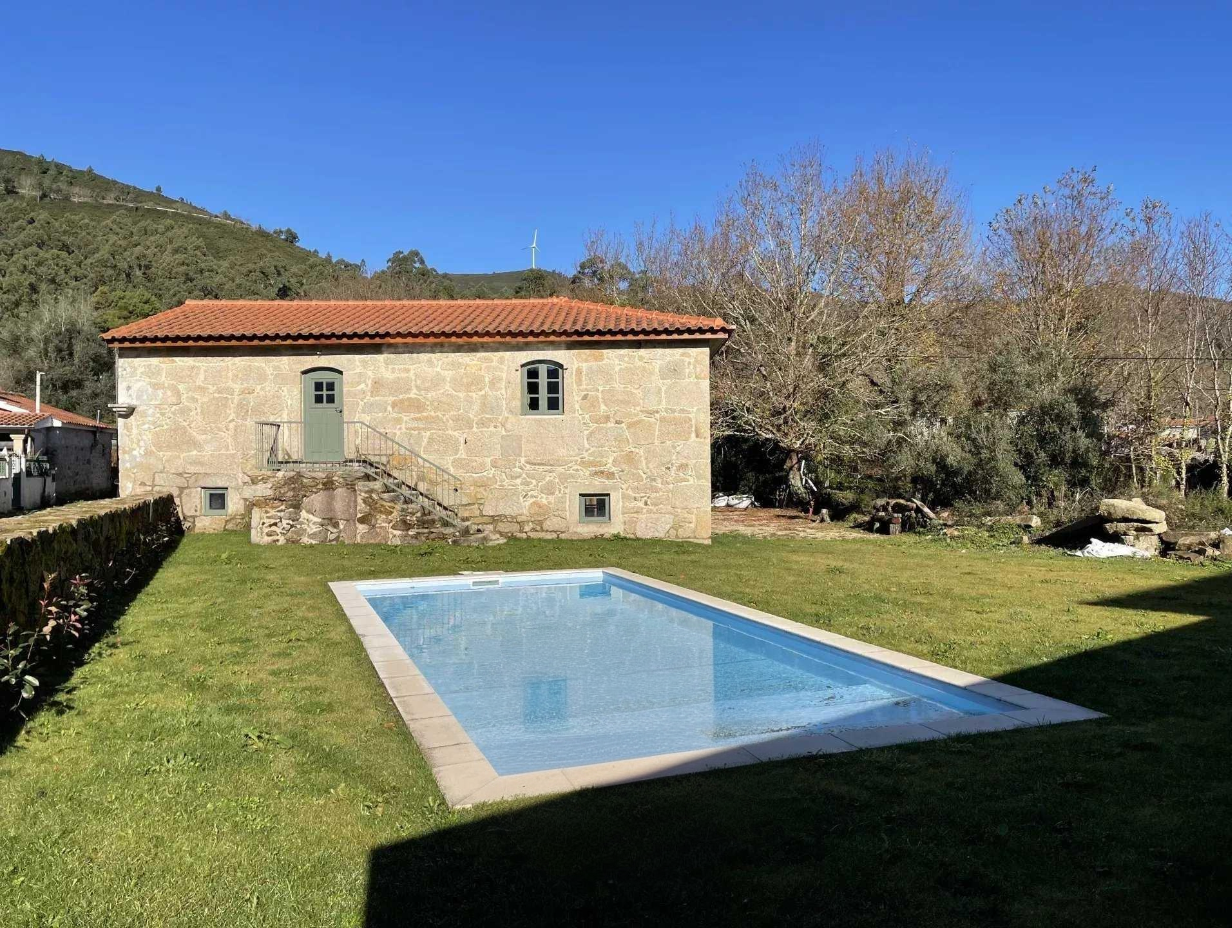
Private pool, mountain outlook, garden
Plot size
Approx. 1,000 m²
Key systems/features
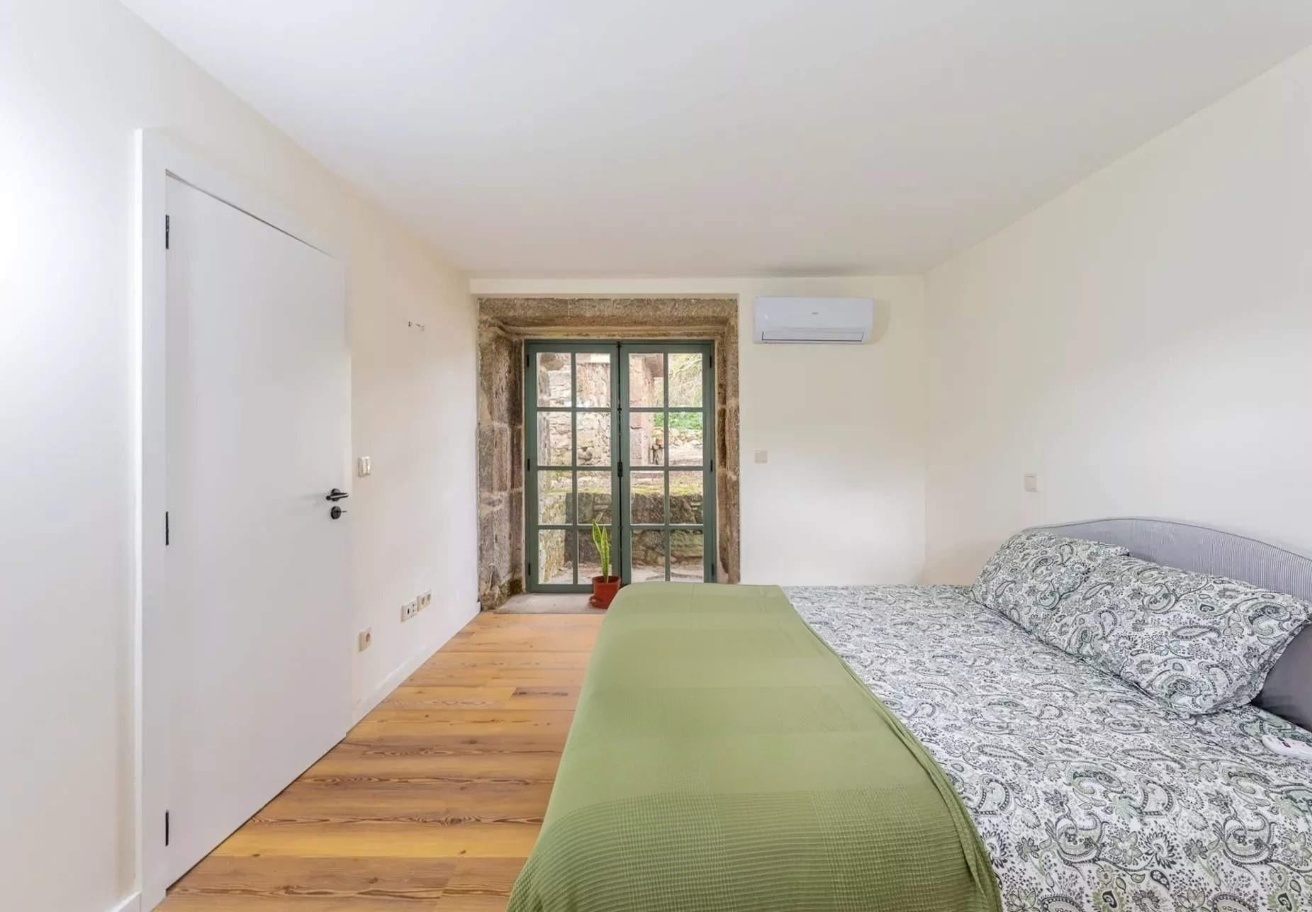
Air conditioning, heat pump hot water
Energy rating
Listed as "Energy Class N"
Lifestyle angle
Multi-generational retreat, dual-occupancy setup, or possible rental/income property
Risk Radar
Overview
This is one of those properties where the headline matters more than the styling. Two independent stone houses on one plot, with a pool and garden, can be highly attractive because the setup creates several possible uses at once. It could work as a family property with privacy between generations, as a live-in-one and rent-the-other arrangement, or as a dual-unit hospitality play. That same flexibility is exactly why the legal structure needs to be verified early. The key question is whether this is legally one dwelling with ancillary accommodation, one property containing two independently lawful residential units, or some more ambiguous middle ground.
That distinction matters because Portugal's Alojamento Local framework is registration-based, with prior registration required, municipal opposition periods applying to new registrations, and municipality-level tools now available for sustainable-growth and containment areas. The official government and Turismo de Portugal guidance confirms that AL registration is made by prior notice through the Balcão Único Eletrónico, with the municipality able to oppose within 60 days, or 90 days in containment areas, and that municipalities may create sustainable-growth or containment regimes through their own regulations.
The second major theme is the restoration. A 1937 stone property in lush northern Portugal can be beautiful and practical, but buyers should not treat "fully restored" as a substitute for paperwork. If there are two usable houses, buyers need to understand whether both are covered by the relevant planning history and whether each has its own lawful residential use position. The safest approach is to ask for the caderneta predial, registo predial, licença de utilização details, architect file, and as-built plans before getting too attached to the income angle.
The third theme is utilities and moisture behaviour. Alto Minho is attractive precisely because it is green, but green landscapes often come with higher moisture exposure, more shade, and more need to understand drainage, ventilation, roof performance and damp control. Because the listing shows "Energy Class N", the energy documentation is also unresolved on the face of it. Portugal requires a valid energy certificate for transactions and even for property advertising, and official guidance says the energy class shown in advertising must come from a valid certificate.
Finally, the pool and land layout matter more here than in a typical single-house village purchase. A dual-villa setup only works smoothly if the outdoor arrangement is logical, title boundaries are clean, and the access, parking, drainage and service systems support independent or parallel occupancy without friction. This is a potentially excellent property, but it is one that should be bought through documentation, not only through atmosphere.
Targeted Questions
Legal Status of the Two Villas
This helps confirm how the tax authority describes the property and whether the two houses appear as one or more taxable units.
The land registry extract confirms ownership, composition, and whether there are charges, mortgages, easements or legal limitations.
This is one of the most important issues for resale, financing and rental strategy.
A second house marketed as independent may not necessarily be recognised that way in legal or municipal records.
Practical independence is useful, but legal independence is what really matters.
Separate use licences make a major difference to how safely you can treat the units as independent dwellings.
Buyers need to know whether the second villa is fully regularised or simply included in a broader description.
The entire investment logic may depend on this answer.
Addressing can indicate how the municipality and utilities view the property.
Prior financing or due-diligence friction can reveal issues early.
The ownership structure affects future resale flexibility and legal clarity.
Even if you do not intend to split them, future exit flexibility matters.
Restoration Permits and Documentation
You need to verify that the restoration was properly authorised, not just attractively executed.
Structural work carries a higher diligence burden than finish-level improvements.
These are major cost and risk areas in older stone buildings.
Final sign-off is often more revealing than the initial permit itself.
This helps verify whether what exists today matches what was approved.
Invoices help establish scope, timing and whether money was spent on the important hidden items.
Transferable warranties reduce early ownership risk.
Hidden systems matter more than visible finishes in an older stone property.
Compliance documentation matters for safety, insurance and future resale.
Small later additions can create outsized regularisation problems.
Poorly handled stone-building renovations can create future damp and ventilation issues.
This affects both comfort and whether the eventual energy documents are likely to make sense.
AL Registration and Rental Potential
Existing use history can save time and reveal whether the setup has already been tested in practice.
The dual-villa concept only translates into dual income cleanly if the registrations support it.
Registration potential should be verified before buyers price in rental upside.
Municipalities can now regulate AL growth through local rules.
Timing and approval risk affect feasibility.
Mixed personal and rental use is attractive here, but it must sit cleanly with the legal structure.
Combined numbers are less useful than unit-by-unit performance.
Understanding the real demand profile helps avoid generic rental assumptions.
Buyers should not overvalue peak-season performance.
Border proximity can be an advantage, but it should be tested rather than assumed.
The best commercial use may not be the most obvious one.
Energy, Heating and Running Costs
It may indicate a missing, pending or not-yet-supplied certificate rather than a true usable rating.
Portugal requires a valid certificate for transactions and for advertising the energy class.
Separate certificates may better reflect the legal and operational status of two dwellings.
Real bills are often more useful than a missing or incomplete certificate position.
The way the houses are heated affects both comfort and year-round viability.
Buyers need to understand whether the system is genuinely reducing winter costs.
Independent systems strengthen the case for separate use.
Stone houses can still be uncomfortable if window performance is weak.
This is especially important in a damp, green northern climate.
Stone buildings can look excellent and still perform poorly in winter.
Building Condition and Moisture Risk
A dual-house setup doubles the need for clear roof information.
Full replacement and patch repairs imply very different future-cost profiles.
Moisture risk is one of the main hidden variables in this type of property.
Past treatment history often reveals where the building has been vulnerable.
Gardened hillside plots can carry hidden external maintenance obligations.
Buyers should not assume the two units are symmetrical in value or performance.
Ancillary structures can affect both utility and legal complexity.
Pool, Garden and Land Boundaries
The pool is a key selling feature and should be legally clean.
Pool replacement and repair costs vary sharply depending on construction type and age.
Filtration and equipment condition affect running costs and near-term maintenance.
Heating changes both the appeal and the operating cost profile.
Safety measures matter particularly if the property may be rented.
The full layout matters because the value here lies in how the whole site works together.
Hidden access rights can materially reduce privacy.
A dual-house layout works best when the outdoor space is legally straightforward.
Garden maintenance costs and practicality depend on water setup.
Mature landscaping can be a benefit, but it is also a maintenance item.
Water, Drainage, Access and Practicalities
Water source affects reliability, maintenance and resilience.
Two houses on one plot may place greater demand on private wastewater infrastructure.
Inadequate wastewater systems can become an immediate post-purchase cost.
Parking affects both multi-generational use and rental practicality.
Private access can create maintenance or shared-rights issues.
Northern Portugal's climate makes year-round access worth checking carefully.
Remote work potential should be verified with real-world use.
Thick stone walls can reduce indoor signal quality.
Privacy, noise and rental suitability all depend on the surrounding pattern of use.
Future flexibility matters in a property with multi-use potential.
Negotiation Intelligence
Buyer Leverage
Medium-High
Key Drivers
Typical Negotiation Range
5-15% below asking
Neutral Phrasing Examples
Country Layer
Portugal (Regulatory Context March 2026)
Portugal's current Alojamento Local regime is registration-based. Official government guidance says AL registration is made through a comunicação prévia com prazo on the Balcão Único Eletrónico, which gives each request a registration number unless the competent municipality opposes it within 60 days, or within 90 days in containment areas. Turismo de Portugal's 2025 update also says municipalities may create sustainable-growth areas and containment areas through their own regulations.
Viewing Strategy
Start with the site layout rather than the interiors.
Next Step
Verify from the listing:
Legal status of the two villas
Ask for the caderneta predial, registo predial and licensing documents so you can confirm whether the two houses are legally recognised as separate dwellings or only marketed that way in practice.
Restoration paperwork and use licences
Request the full restoration file, architect or engineer sign-off, and the licença de utilização position for each house so you can verify that the 1937 property was regularised properly after restoration.
AL feasibility for each unit
Do not assume that two independent houses automatically support two independent AL operations. Check whether each unit can be registered separately and whether any municipal opposition or local regulation could affect that plan.
Energy-certification and operating reality
Clarify the “Energy Class N” wording immediately by obtaining the valid energy certificate or certificates, together with recent utility bills, so you can assess whether the restored houses are comfortable and efficient in real use.
Pool, land and utility clarity
Confirm that the pool is properly permitted, that the 1,000 m² boundaries are clear, and that water, drainage, parking and access arrangements support smooth dual occupancy without hidden constraints.
A prepared buyer should approach the agent calmly and frame questions as due diligence.
Because this is a property where the legal, structural and regulatory context matters, run it through one of the property tools before contacting the agent.
Use the Property Risk Assessment to test the title, licensing and operational risks, or the Rental Yield Calculator to model whether the dual-villa setup still performs well once the legal and AL position is verified.
Disclaimer: The Property Drop is buyer-focused intelligence, zero sales agenda. We curate exceptional properties, in southern Europe, from third-party agents and arm you with decision tools. No commission, no transactions, no agent partnerships, no skin in the game beyond helping you choose wisely. Information stays accurate until it doesn't (properties sell, prices shift, markets move). Everything here is shared for informational purposes only and should not be treated as legal, financial, or investment advice. Images belong to original agents. Read our Terms of Service to learn more.
IMPORTANT REMINDER: When contacting property agents featured on The Property Drop, you are entering into direct communication with third parties. It's recommended that you verify all property details independently, conduct thorough due diligence, engage qualified professionals (solicitors, surveyors, financial advisors), understand your rights and obligations under local property laws, and never send money or make commitments without proper legal protection.
